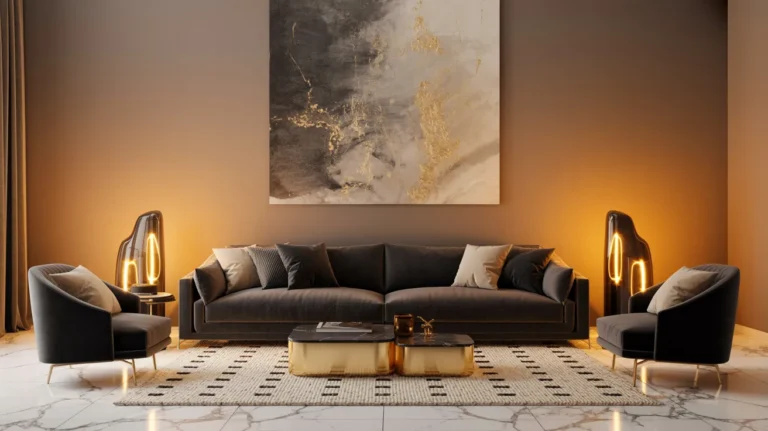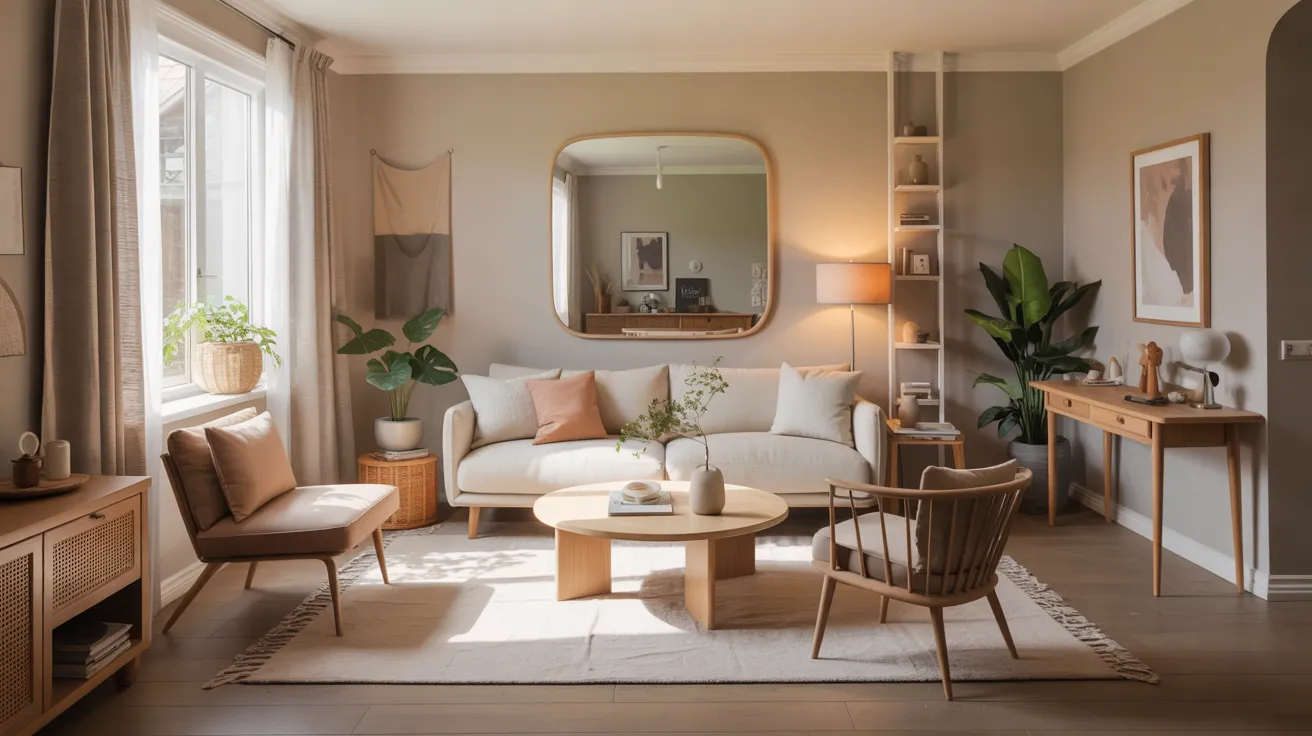
19 Arranging Furniture Small Living Room Made Beautiful
Small living rooms can feel crowded long before you run out of floor space. A sofa that blocks the walkway or a coffee table that sits too close can make the whole room harder to enjoy.
If you’re searching for arranging furniture small living room ideas, this guide shares 19 practical setups that help your space feel more open, comfortable, and pulled together. You’ll find ways to position a sofa, define clear walking paths, choose compact furniture, use vertical storage, and hide everyday clutter without losing your personal style.
You don’t need to replace everything or follow strict design rules. Start by noticing where you walk, sit, and set things down each day. Small, thoughtful changes can make your living room easier to use and more inviting. Save your favorite ideas as you go, then try the one that suits your home best.
Float the Sofa
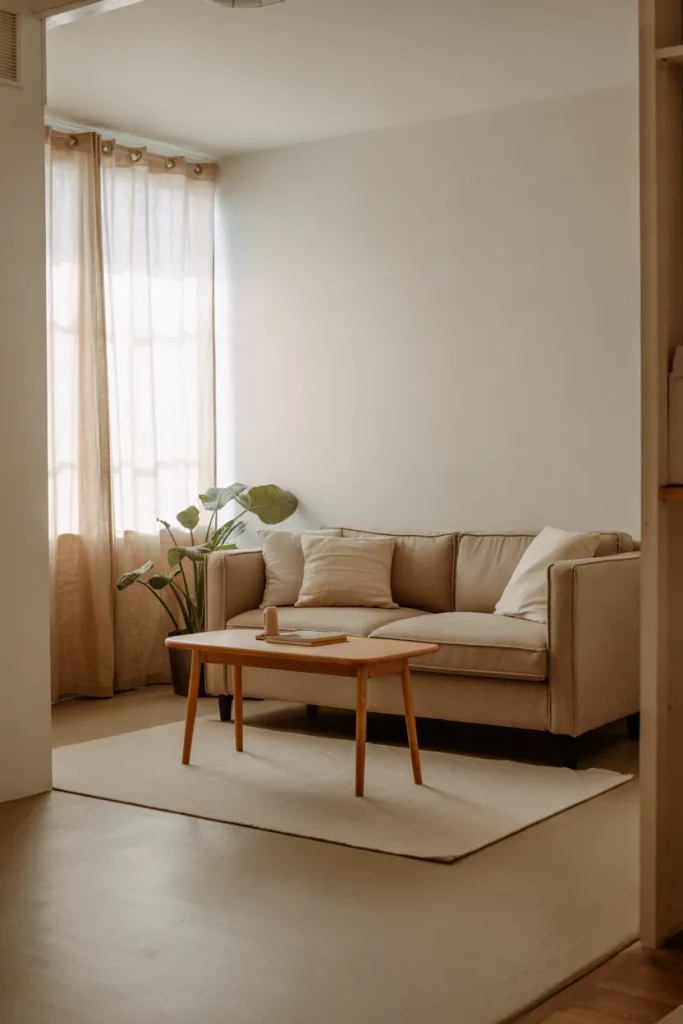
A sofa does not need to sit flat against the wall to make a small room work. Pull a compact sofa forward a few inches and place a slim coffee table within easy reach. This shift gives the seating area a clear shape instead of making the room feel crowded.
Anchor the arrangement with a rug beneath the sofa’s front legs, then angle an accent chair toward the seating group. Keep a comfortable route beside the sofa, and resist filling every gap with tables or baskets. Open floor is part of the design, not wasted space.
Clear Walking Paths
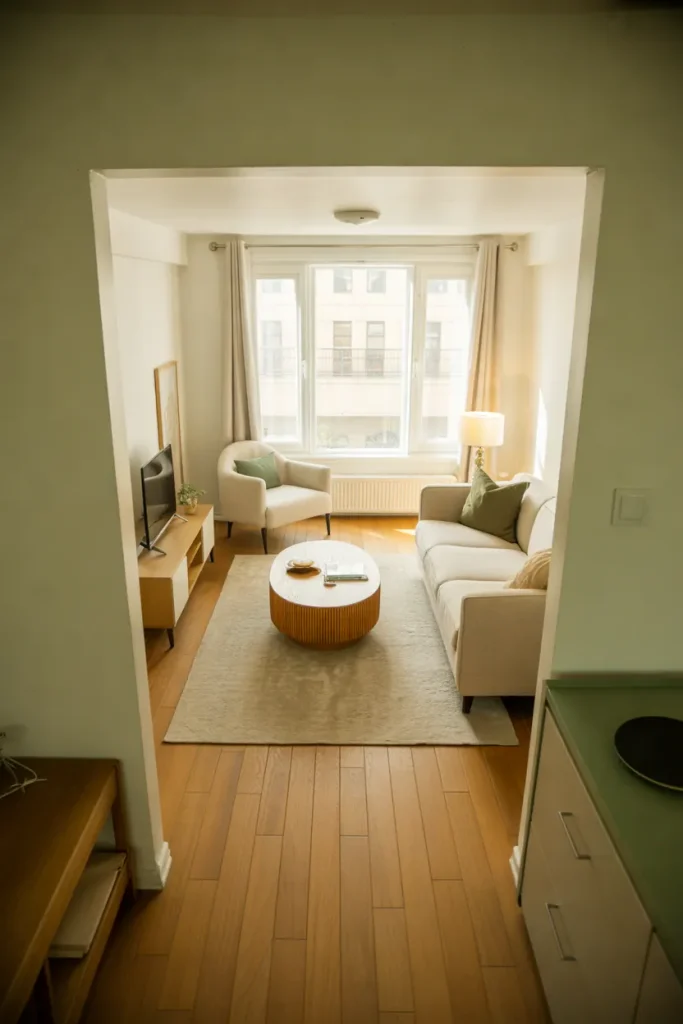
- A clear route makes a compact living room easier to move through.
- Keep the main walkway around 30 to 36 inches wide when the room allows.
- Move occasional chairs closer to the sofa instead of leaving them near the doorway.
- Choose a round or oval coffee table if corners interrupt the walking path.
- Keep baskets, floor lamps, and plant stands outside the main traffic line.
Before moving furniture, walk from the entrance to the sofa, window, and adjoining room. Notice where you have to turn sideways or step around a chair. Shift those pieces first, then adjust cushions and accessories. Planning around daily movement helps the room feel calmer without buying anything new.
Explore More: 21 Genius Furniture Layout Ideas for Small Living Rooms You’ll Love
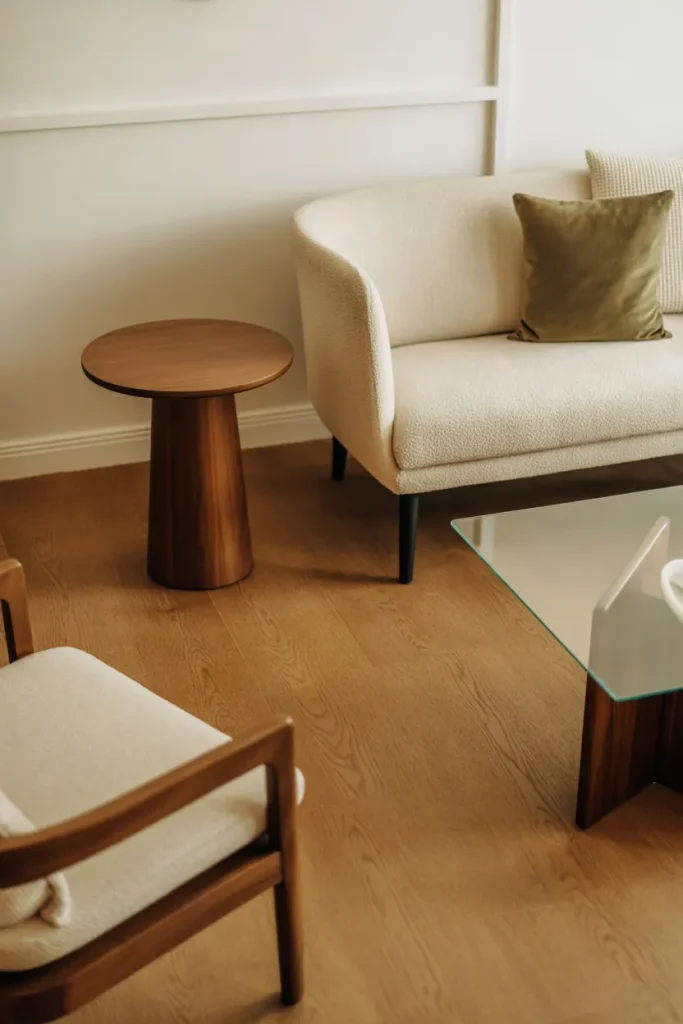
Leggy Furniture
Quick Tip:
Choose a sofa or chair with visible legs so more of the floor remains in sight. Pair one raised piece with an open base table to keep the room from feeling too heavy.
Furniture that reveals the floor can make a tight room feel lighter without changing its footprint. I’ve noticed that skirted sofas and solid bases can look bulky, especially against darker flooring. If replacing a large piece isn’t practical, start with a leggy accent chair or slim side table, then keep finishes simple.
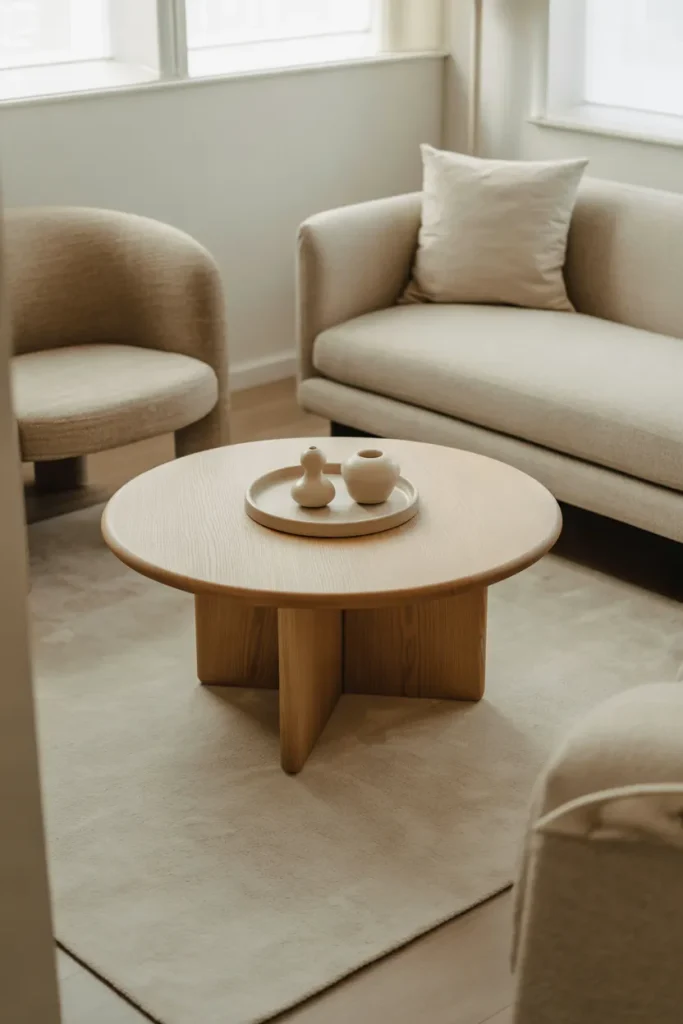
Round Coffee Table
BEFORE:
A bulky square coffee table can make a narrow seating area feel cramped. Its sharp corners interrupt walking paths, especially when the sofa sits close to another chair.
AFTER:
A round coffee table softens the layout and creates smoother movement around the seating group. Its curved edges also reduce the chance of bumping into corners in a busy household.
A round table is especially useful in a room where people pass between the sofa and another doorway. Its curved edge reduces awkward corners, while a compact footprint leaves more visible floor. Choose a size that keeps about 16 to 18 inches between the table and seating, if space permits.
Compact Corner Sofa
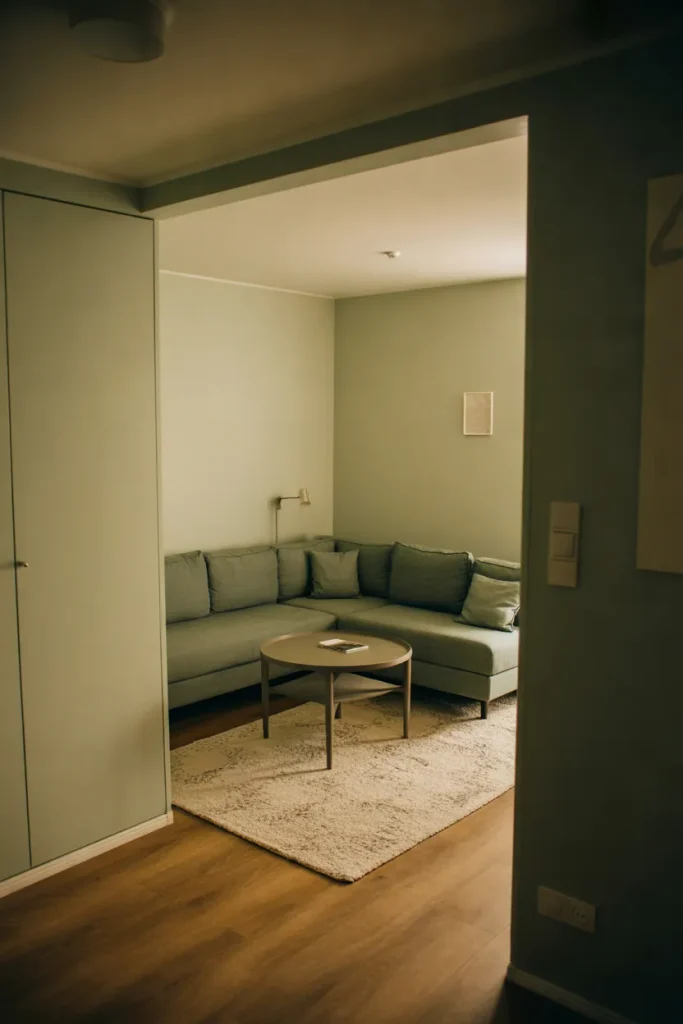
- Measure both walls. Start with the room dimensions and check the sectional’s full width, depth, and chaise length before choosing a model.
- Place the sofa in the corner. Keep the longer section along the wall that leaves the clearest route through the room.
- Add a small coffee table. Choose a round or oval design that fits comfortably within reach of the seats.
- Keep the opposite side light. Use one compact accent chair or a small floor lamp instead of another bulky sofa.
A corner arrangement works best when the sectional fits the room rather than swallowing it. Measure both walls before shopping, including the depth of the chaise. If a full sectional blocks a window or walkway, use a compact loveseat with a movable ottoman to create a similar tucked-in feel.
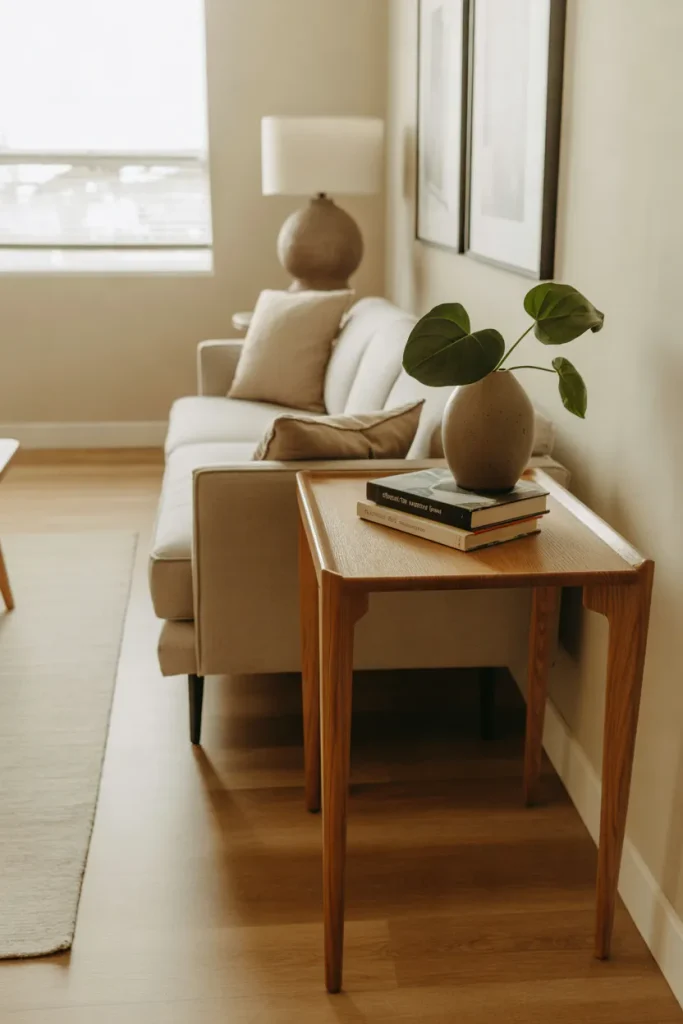
Slim Console Table
| Comparison Point | Option A: Deep Cabinet | Option B: Slim Console |
|---|---|---|
| Floor space | Takes up more room | Leaves more walking space |
| Visual weight | Can look bulky | Creates a lighter appearance |
| Storage | Often provides enclosed storage | Offers a surface for everyday essentials |
| Best placement | Against a wall with enough depth | Behind a sofa or along a narrow wall |
A slim console gives you a landing spot for keys, a lamp, or a cup without the depth of a bulky cabinet. Keep the top lightly styled and leave space underneath for a small basket only if it doesn’t interrupt the walkway. Measure the wall before choosing a console.
Wall-Mounted Lighting
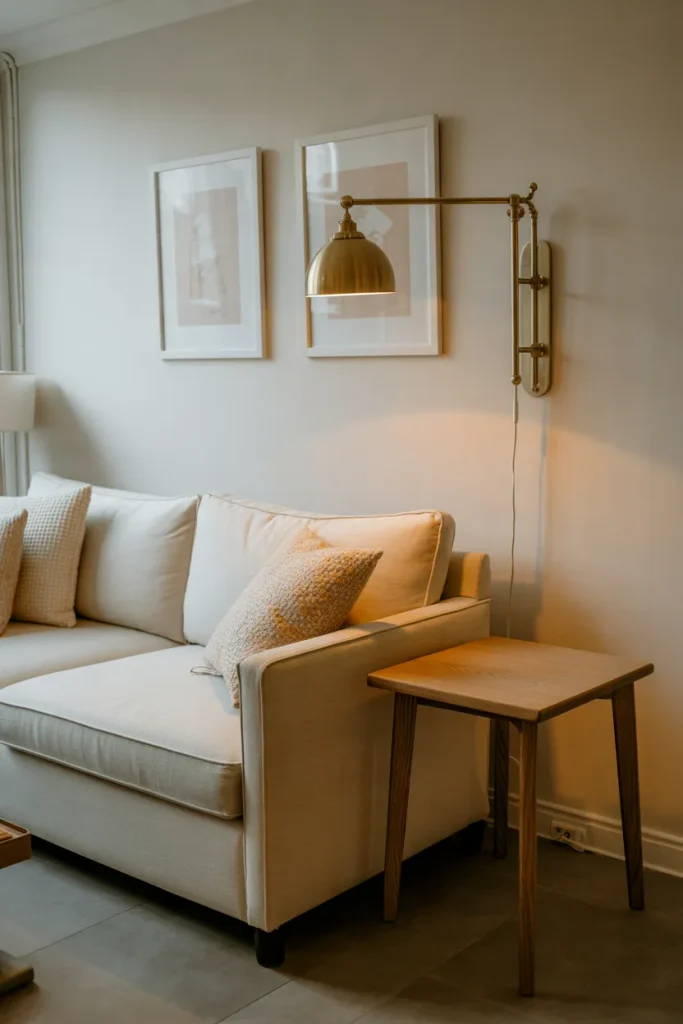
DO
- Free up precious floor space with a wall-mounted lamp beside the sofa.
- Choose an adjustable swing-arm design for reading or relaxing.
- Match the lamp finish to existing furniture hardware for a coordinated look.
DON’T
- Place a floor lamp where it blocks the main walkway.
- Install lighting so low that it interferes with people sitting down.
- Ignore wiring requirements or rental restrictions before mounting fixtures.
Wall-mounted lights work well beside a sofa or reading chair, particularly where a side table would narrow the path. A swing-arm design lets you direct light toward a book and fold it back afterward. Check the mounting height and wiring before installation, especially in rental homes.
Mirror the Window
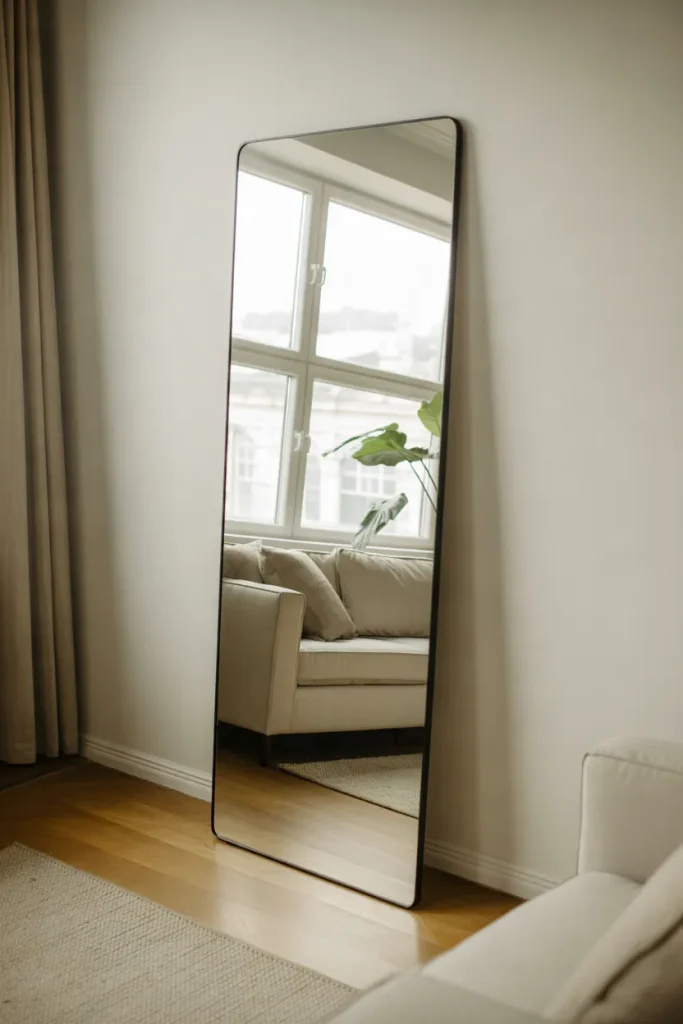
Cost: Low to moderate
Best Placement: Opposite or beside a window
Works In: Dark or narrow living rooms
Styling Tip: Choose a slim frame that complements the furniture.
A mirror placed across from a window can spread daylight deeper into a room and create a sense of extra depth. Keep the reflection intentional: aim it toward a bright view, artwork, or greenery rather than a cluttered shelf. Secure large mirrors properly, especially in homes with children or pets.
Zone With a Rug
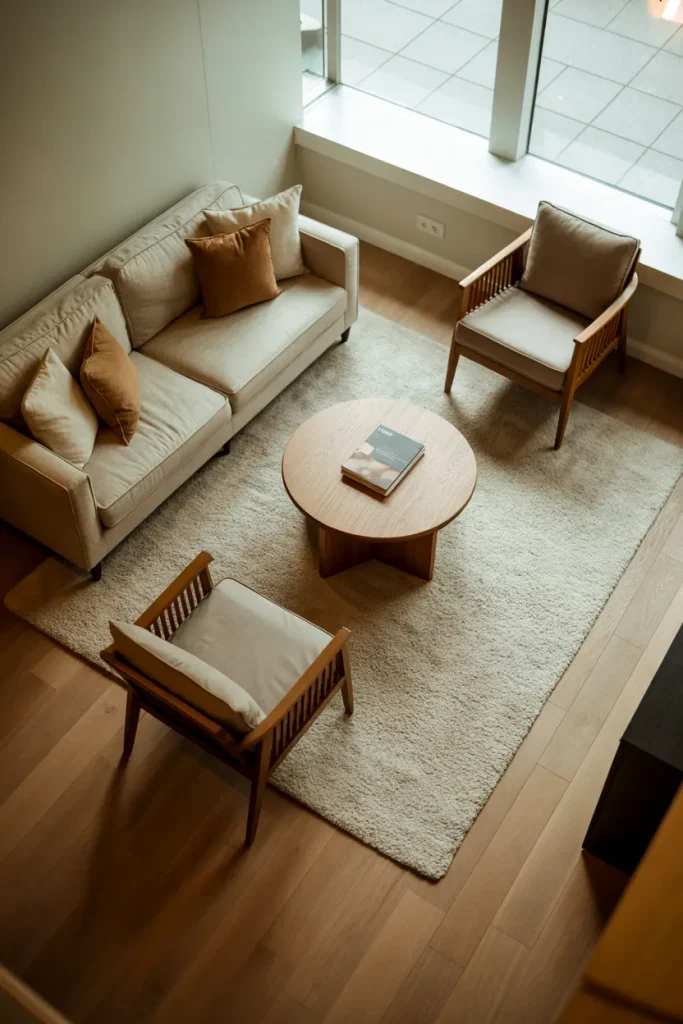
For anyone searching for arranging furniture small living room ideas, start with the rug. It defines the seating area, especially in an open-plan apartment where the sofa shares space with a dining table or entryway. Choose a size that reaches beneath the front legs of the sofa and chairs.
Keep the rug’s edges clear of door swings and make sure chairs remain on it when pulled back, if possible. A rug that’s too small can make the furniture feel disconnected, while a well-sized one gives the arrangement a clear center. Repeat one rug color in cushions for a cohesive finish.
Nesting Side Tables
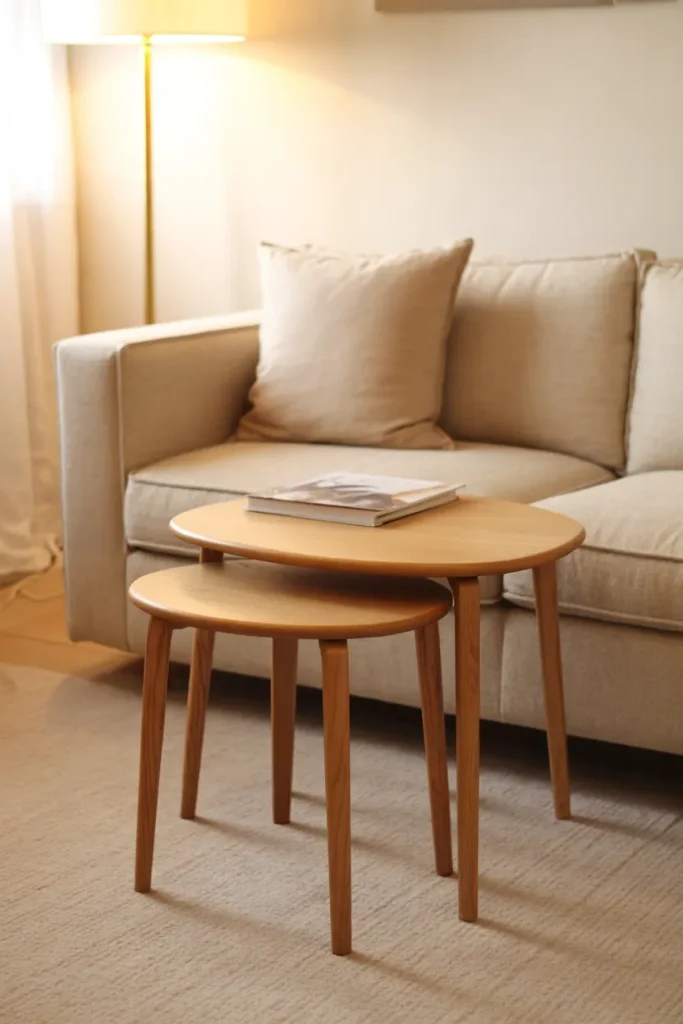
- Save floor space: Tuck the smaller table beneath the larger one when you don’t need both surfaces.
- Create flexible seating: Pull the smaller table beside an accent chair when guests arrive.
- Keep proportions balanced: Choose tables that sit comfortably beside the sofa without crowding the cushions.
- Match your finishes: Repeat the room’s wood tone or metal accents for a coordinated appearance.
- Leave walking room: Keep the tables close enough to reach but outside the main walkway.
Nesting tables give you extra surface space without committing to two full-sized side tables. They’re especially useful in apartments where the living room serves several purposes throughout the day. Keep the larger table beside the sofa and slide the smaller one underneath whenever you need more open floor space.
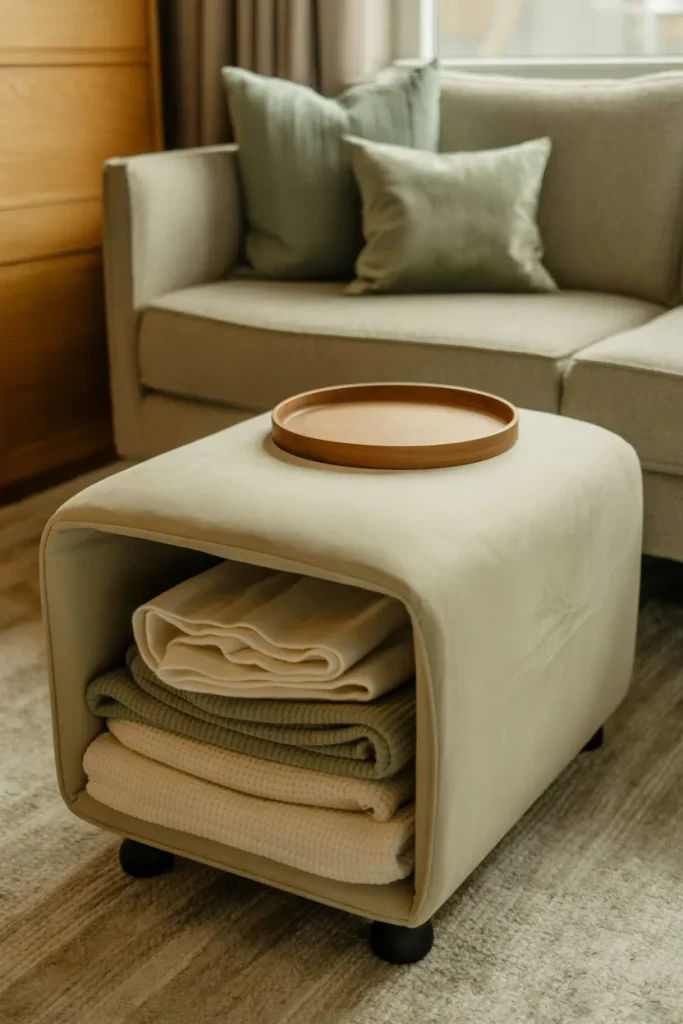
Storage Ottoman
Quick Tip:
Choose a storage ottoman that opens easily and fits within reach of the sofa. Use it to store blankets, magazines, or spare cushions, and place a sturdy tray on top when you need a surface for drinks.
A storage ottoman can replace several bulky items in a small living room. It provides a footrest, extra seating, and hidden storage in one compact piece. Choose a lightweight model that’s easy to move when you need more room, and check that its lid opens without hitting nearby furniture.
Furniture With Purpose
BEFORE:
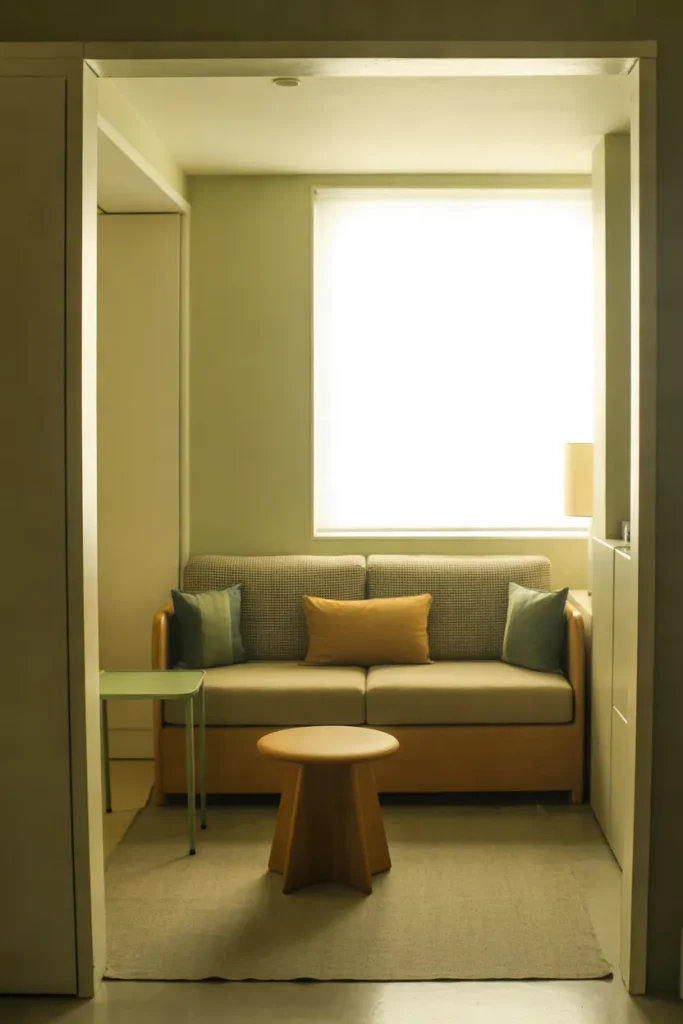
A small living room can quickly fill with furniture that serves only one purpose. A separate footstool, extra chair, bulky storage cabinet, and coffee table may leave little room to move.
AFTER:
A storage bench provides seating and a place for blankets, while an ottoman works as a footrest and occasional table. Fewer separate pieces leave more floor visible.
Look at every item before buying another one. Could a bench replace a bulky accent chair, or could an ottoman provide both storage and a place to rest your feet? Multi-purpose furniture helps keep the layout practical, but choose pieces that fit the room’s dimensions and remain easy to move.
Choose a Loveseat
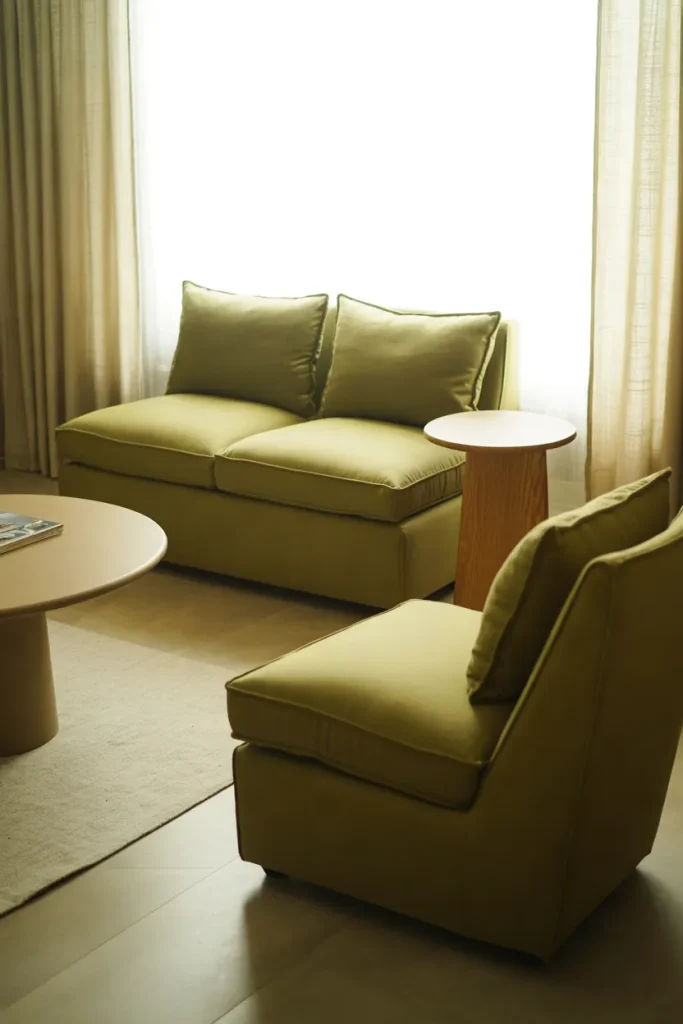
- Make room to breathe: Choose a two-seat sofa if a full-size couch leaves too little room to walk.
- Measure before buying: Check the full width and depth, including the armrests, to avoid blocking nearby furniture.
- Keep extra seating light: Pair the loveseat with one compact chair or a movable pouf rather than another bulky sofa.
- Choose a focal point: Position the loveseat toward the television, fireplace, or main conversation area.
A loveseat can provide comfortable seating without dominating a small living room. Look for narrow arms and a moderate seat depth to preserve usable space. Before purchasing, mark the sofa’s dimensions on the floor with painter’s tape. You’ll see exactly how much room remains for a coffee table and walkway.
Also See: 23 Stunning Small Living Room Ideas With Fireplace
Angle the Accent Chair
| Comparison Point | Option A: Square Placement | Option B: Angled Placement |
|---|---|---|
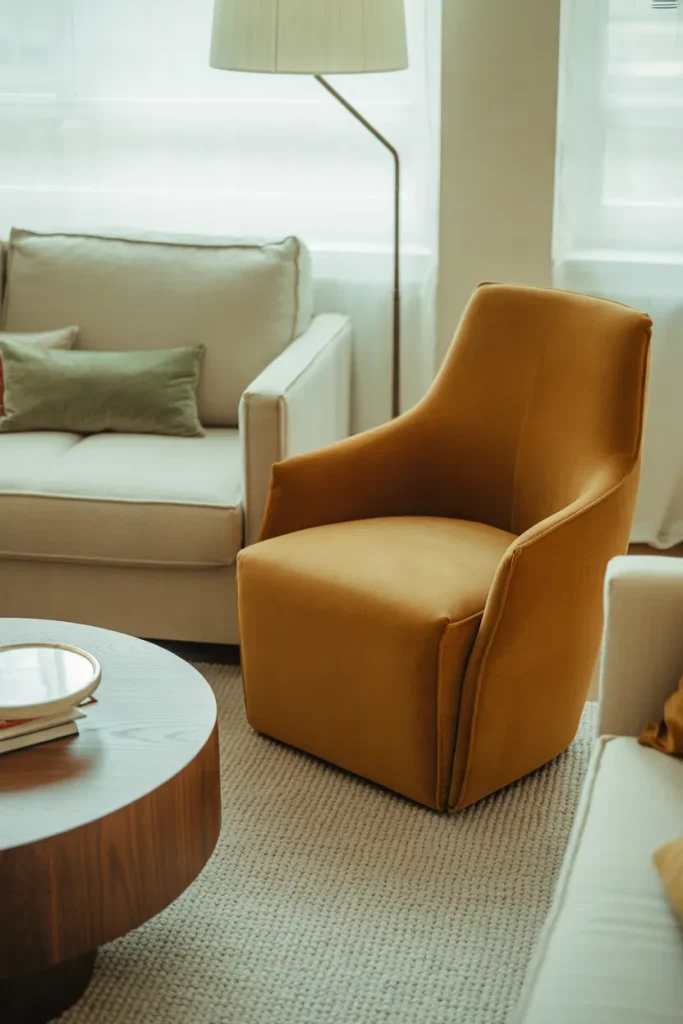
| Conversation | Can feel rigid | Encourages interaction |
| Walking space | May create awkward corners | Can open a clearer route when positioned carefully |
| Visual effect | Looks formal and structured | Adds movement and softness |
| Best use | Symmetrical layouts | Flexible seating arrangements |
A slight angle can make an accent chair feel connected to the sofa instead of parked against a wall. Turn it inward toward the coffee table, then sit down and check whether you can comfortably reach the table. Keep the chair clear of doorways, and adjust its position until conversation and movement both feel natural.
Keep Windows Open
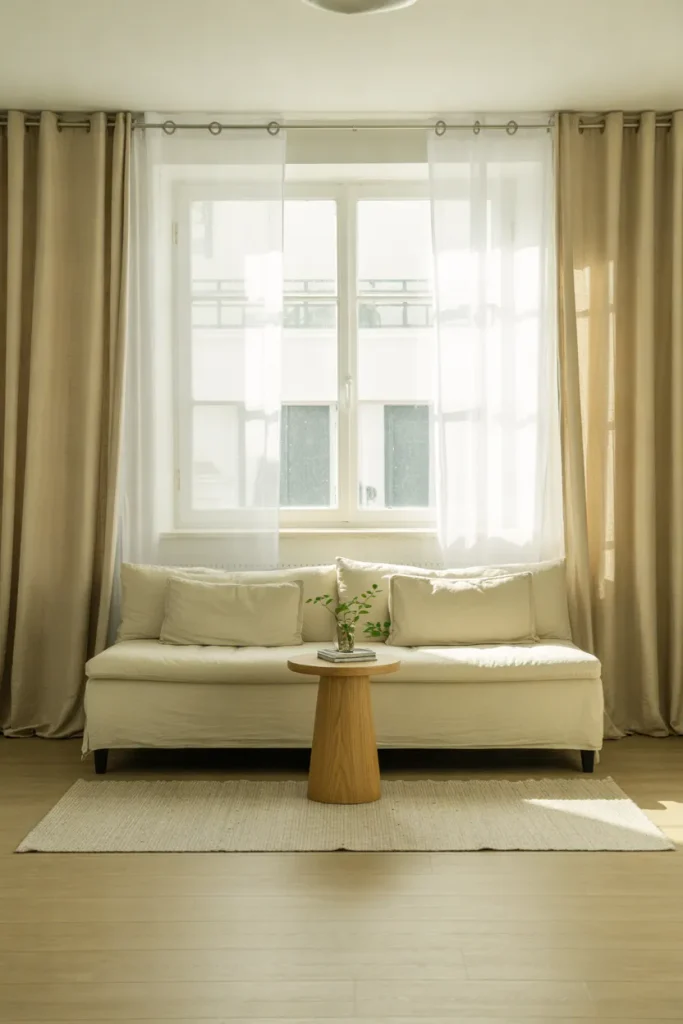
DO
- Position low-profile furniture beneath windows when it doesn’t obstruct the opening.
- Use sheer curtains to let daylight pass through while maintaining privacy.
- Place tall plants beside the window rather than directly in front of the glass.
- Keep bulky shelving away from the brightest part of the room.
DON’T
- Block windows with tall bookcases or oversized armchairs.
- Push a sofa against a window if it prevents the curtains from opening.
- Cover the glass with heavy, dark curtains throughout the day.
- Crowd window ledges with accessories that make the view feel cluttered.
Natural light helps a compact living room feel more open, so arrange furniture to protect it. If the window is your brightest feature, keep nearby furniture low and visually light. Leave enough room to open curtains, clean the glass, and reach window controls without moving heavy pieces.
Vertical Storage Shelves
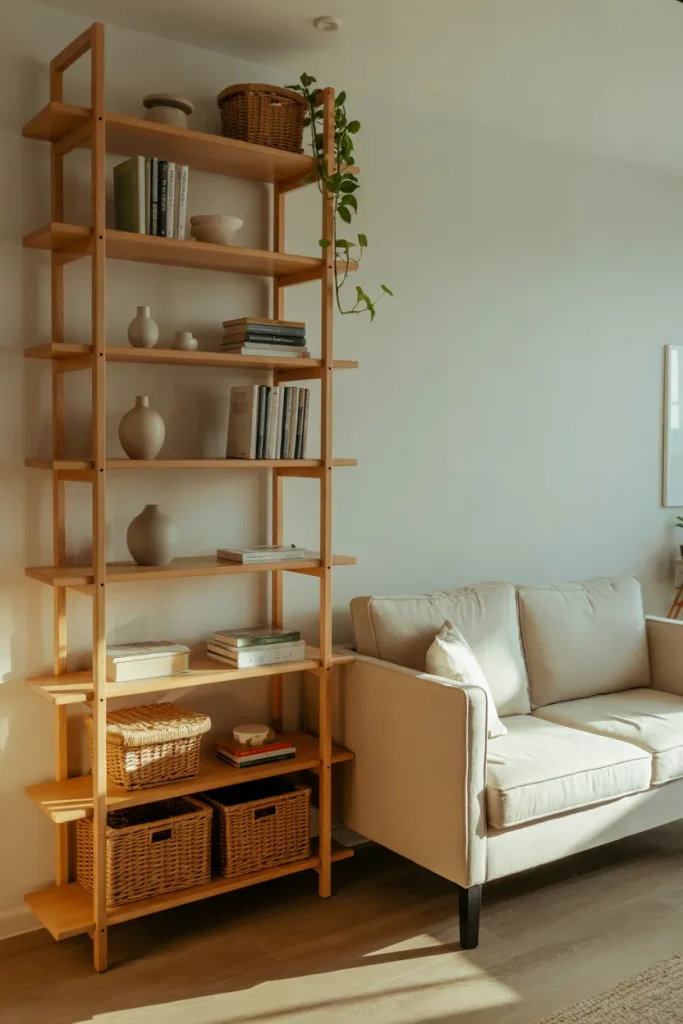
Cost: Low to moderate, depending on shelf materials
Best Placement: Beside a sofa or along an unused wall
Works In: Narrow apartments and compact living rooms
Styling Tip: Mix books, baskets, and a few decorative objects for a balanced display.
When floor space is limited, look upward rather than adding another cabinet. Tall, narrow shelves use vertical space while keeping more of the floor available for seating and movement. Place frequently used items on reachable shelves, store smaller belongings in baskets, and secure tall units to the wall for safety.
Balance Visual Weight
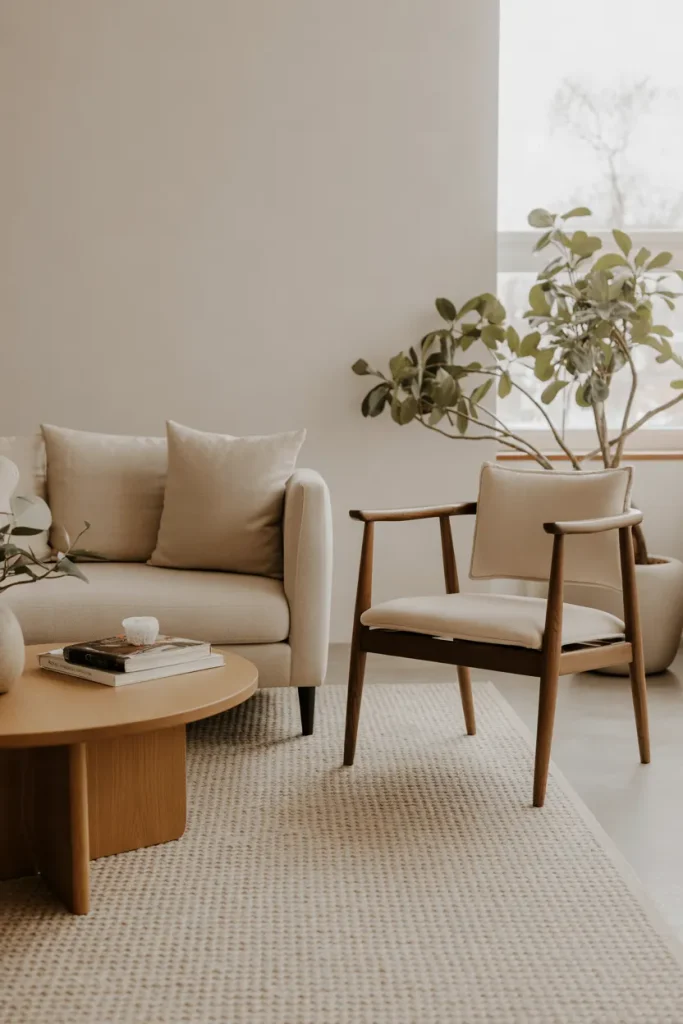
A room can feel crowded even when every piece technically fits. The secret is balancing the visual weight of your furniture, colors, and accessories instead of placing all the bulky items on one side.
When planning arranging furniture small living room layouts, pair a substantial sofa with a lighter accent chair or open-leg side table. Keep darker furniture distributed rather than grouped in one corner, and leave some wall space empty. These small adjustments help the room feel balanced without requiring matching furniture sets or expensive purchases.
Hide Everyday Clutter
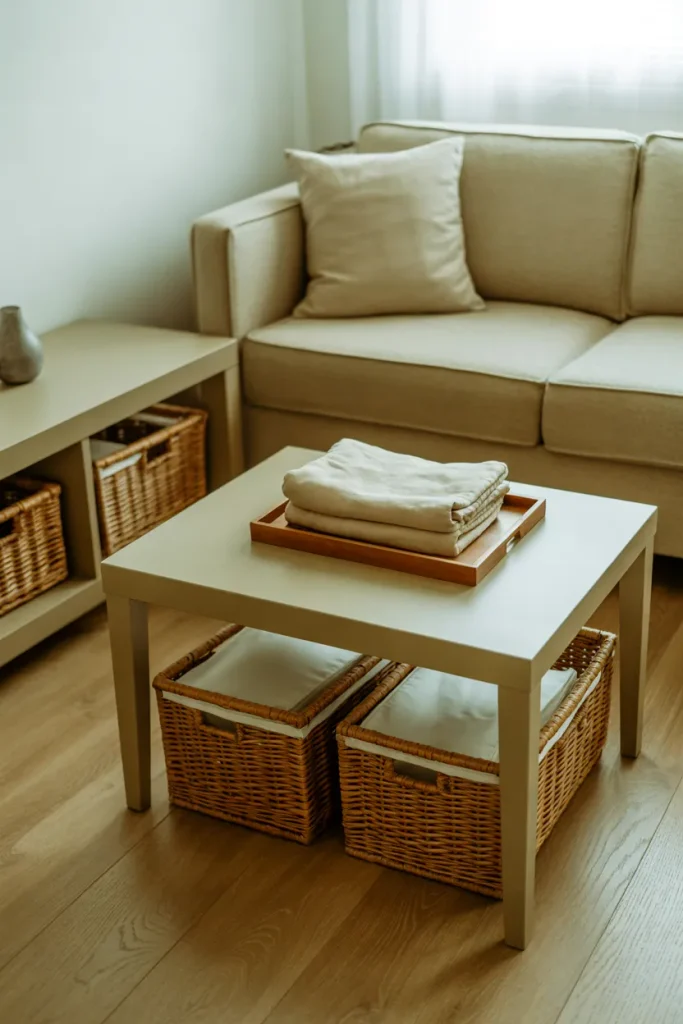
- Choose closed storage: Use a storage bench or cabinet to hide remotes, chargers, and everyday accessories.
- Use matching baskets: Group loose items in two or three baskets rather than scattering containers around the room.
- Clear the coffee table: Keep only a tray, a small book stack, or one decorative object on display.
- Create a drop zone: Place a small bowl on a console for keys and other frequently used items.
- Store blankets neatly: Fold spare throws inside an ottoman or basket beside the sofa.
Clutter can make even carefully arranged furniture feel cramped. Give everyday belongings a specific home near where you use them, so tidying takes minutes rather than becoming another chore. Keep frequently used items accessible and store occasional items out of sight. A clear tabletop and visible floor can make the entire room feel more spacious.
Folding Side Table
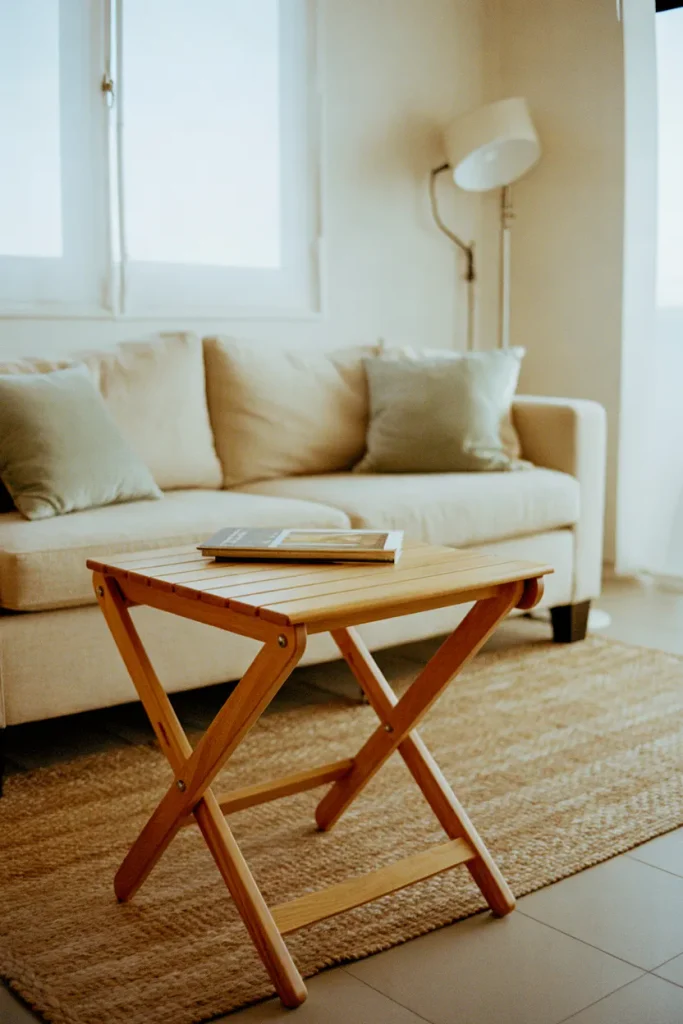
Cost: Low to moderate
Best For: Small apartments and flexible seating areas
Skill Level: Beginner
Main Benefit: Extra surface space without permanent bulk
Small living rooms need furniture that adapts as the day changes. A folding side table can sit beside the sofa for coffee, then fold away when you need space for stretching, children’s play, or extra guests. Choose a stable design and keep its folded position clear of the main walkway.
Conclusion
A beautiful small living room is less about fitting in more furniture and more about giving every piece a clear purpose. These arranging furniture small living room ideas can help you open up walking paths, make better use of corners, and create a seating area that feels comfortable instead of crowded.
Start with one simple change, such as moving the sofa, choosing a round table, or clearing the window. Notice how the room works before buying anything new. Save this article on Pinterest for your next refresh, and share it with someone who could use a little extra space and inspiration. Your room can work beautifully, one thoughtful change at a time.