20 Easter Centerpiece Ideas for a Stunning Spring Table
A beautiful Easter table doesn’t need an expensive floral arrangement or a whole afternoon of crafting. The right easter centerpiece ideas can turn a simple meal into a spring celebration guests will remember. Whether you’re hosting brunch for six or setting a cozy table for two, small details matter: flowers that don’t block conversation, decorations that leave room for food, and colors that work with dishes you already own.
In this collection, you’ll find 20 approachable looks, from tulip pitchers and speckled egg nests to candlelit trays and fresh greenery. Each one gives you a clear starting point, so you can choose a design that fits your space, your budget, and the time you have. Pick one, gather a few supplies, and let your table feel like spring.
Pastel Tulip Pitcher
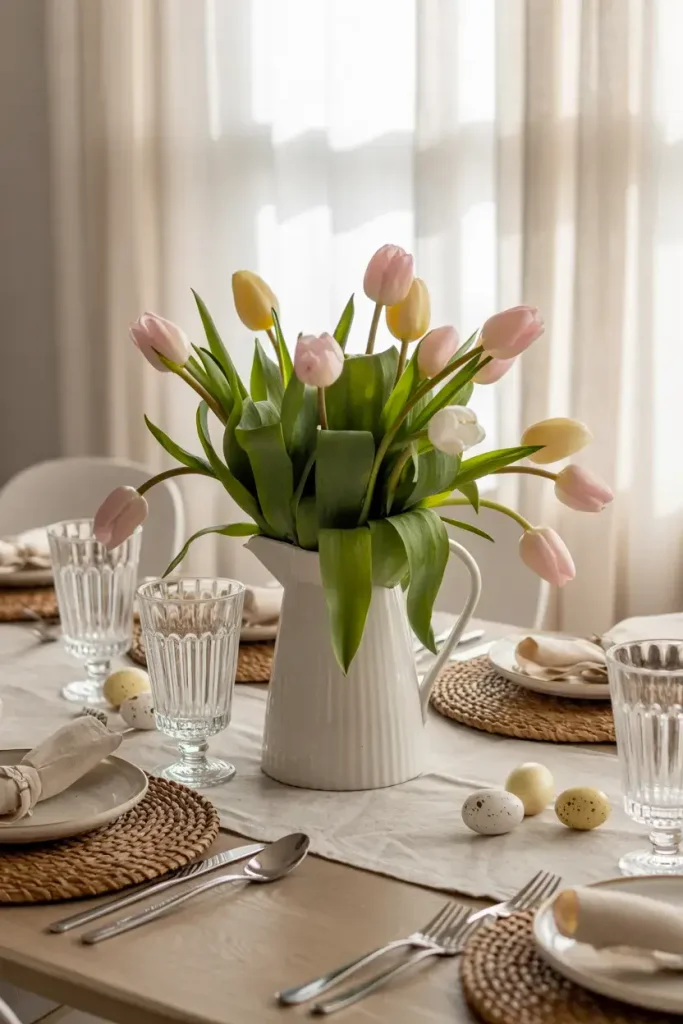
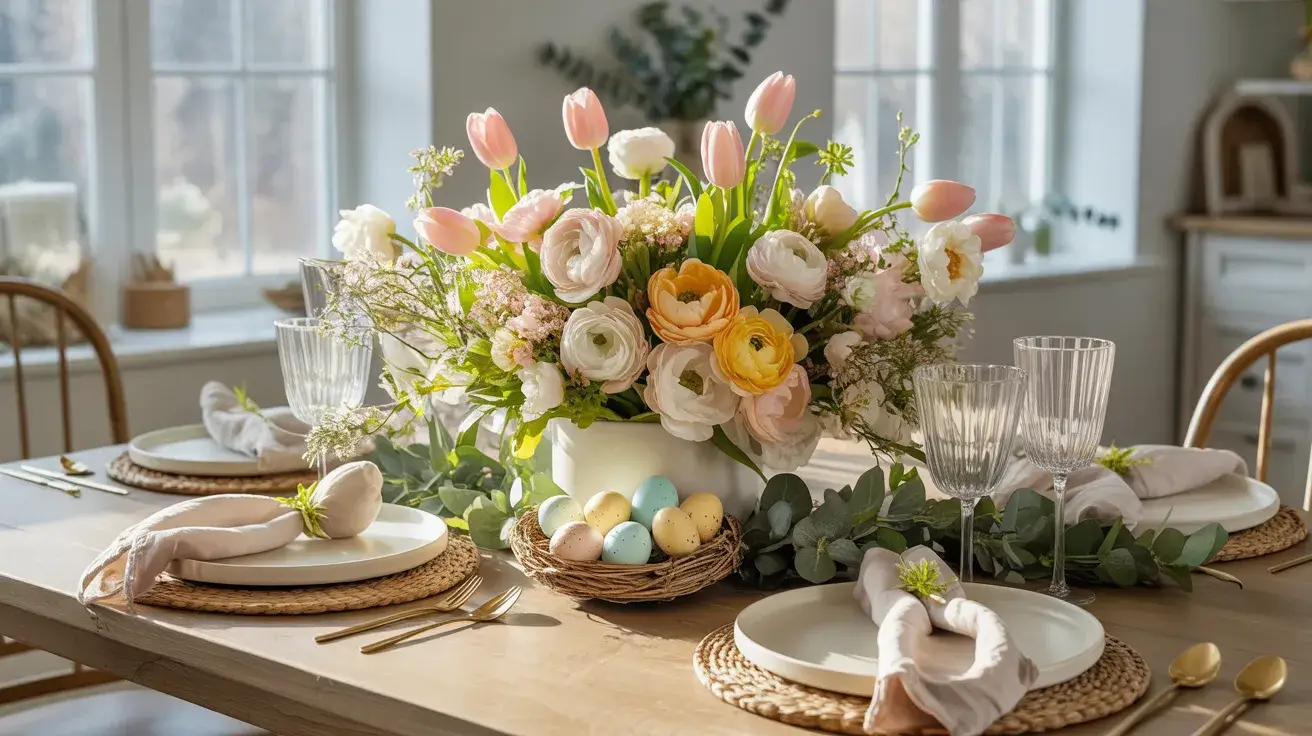
Fresh tulips make an Easter table feel welcoming without needing a complicated arrangement. Fill a white ceramic pitcher with 12 to 15 stems in blush pink, pale yellow, and cream. Cut the stems at slightly different heights so the blooms fall naturally over the rim instead of standing stiffly upright.
Set the pitcher on a narrow linen runner and place three painted eggs beside it for a subtle seasonal touch. If the pitcher opening is wide, tuck a small jar inside to keep the stems gathered. Choose a low pitcher so guests can chat comfortably across the table.
Speckled Egg Nest
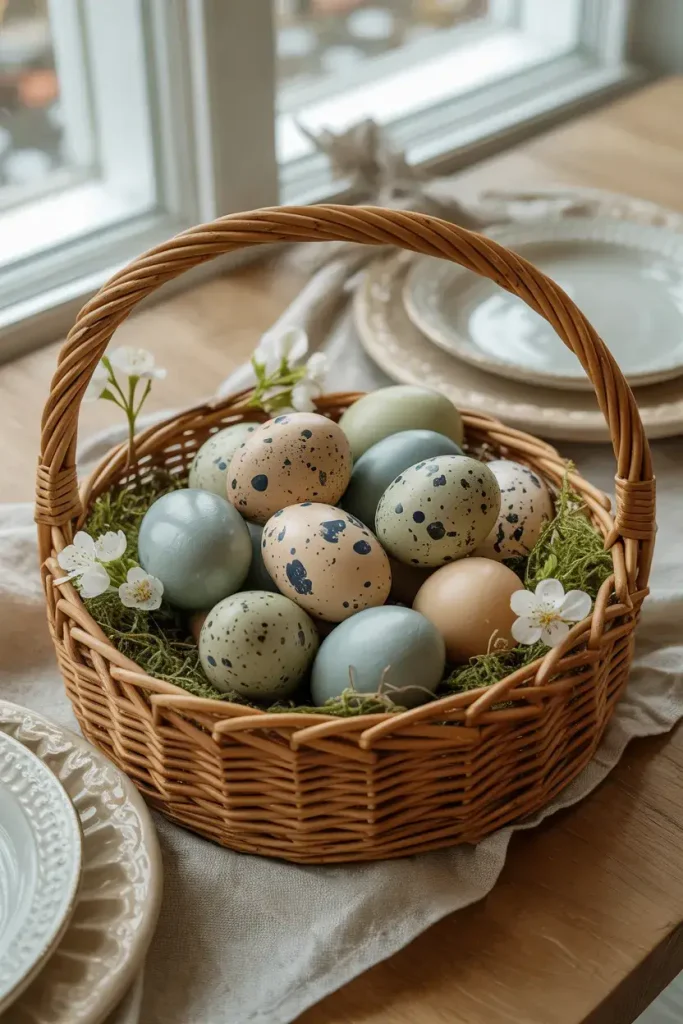
- Start with a woven nest: A little nest of speckled eggs brings instant spring charm to the middle of the table. Choose a shallow willow basket or grapevine wreath about 10 inches across.
- Build a soft base: Tuck preserved moss or raffia into the center so the eggs stay in place.
- Pick a muted palette: Cluster five to seven faux eggs in dusty blue, sage, and cream.
- Add tiny flowers: Slip short faux baby’s breath stems between the eggs for a delicate finish.
- Protect the table: Place the arrangement on a wooden board or linen napkin to catch loose moss.
Among easy easter centerpiece ideas, this compact nest is especially useful on small dining tables. It sits low enough for conversation and leaves room for serving platters. Choose reusable eggs so you can bring it out next spring, and keep any loose moss away from plates and uncovered food.
Candlelit Greenery Tray
Quick Tip:
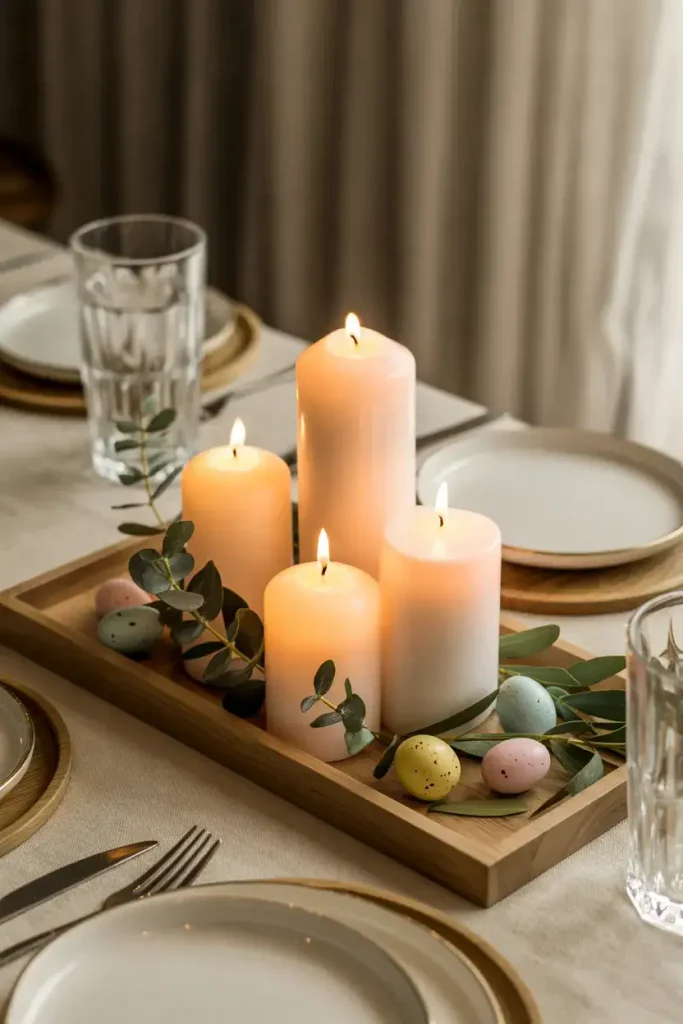
Soft candlelight and greenery can make even a plain table feel ready for Easter dinner. Set three flameless ivory pillar candles at different heights inside a narrow wooden tray. Tuck short eucalyptus or olive sprigs around them, leaving the candle tops clear.
The blend of wood, greenery, and warm light works especially well with white plates and natural linen. Scatter a few miniature eggs along the tray for a seasonal detail without making it feel cluttered. Select a tray that leaves enough space for glasses and shared dishes.
Bunny Bud Vase Cluster
BEFORE:
That empty strip down the middle of the Easter table can make even lovely place settings feel unfinished. One oversized vase often crowds plates and blocks faces across the table.
AFTER:
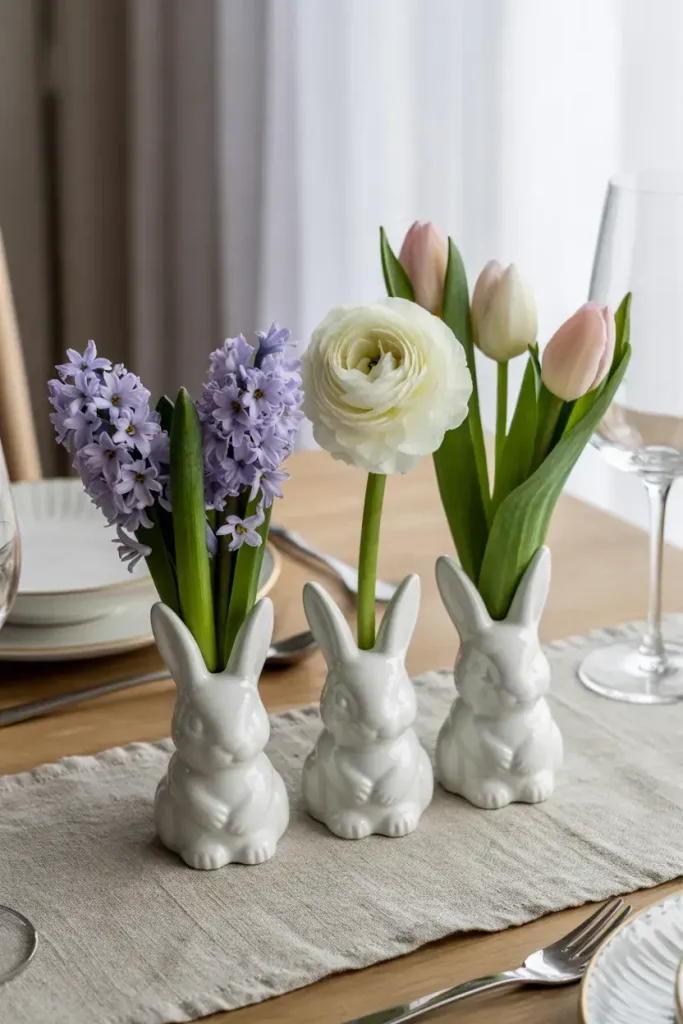
Three tiny bunny bud vases bring flowers into the scene without taking over. Their staggered heights create movement, while the white ceramic keeps the look calm and coordinated.
Arrange the vases in a loose triangle along a linen runner, leaving at least a hand’s width between each one. Place one or two short stems in every vase and vary the blooms slightly. If guests are seated on both sides, keep the tallest flowers below eye level for easy conversation.
Carrot Garden Runner
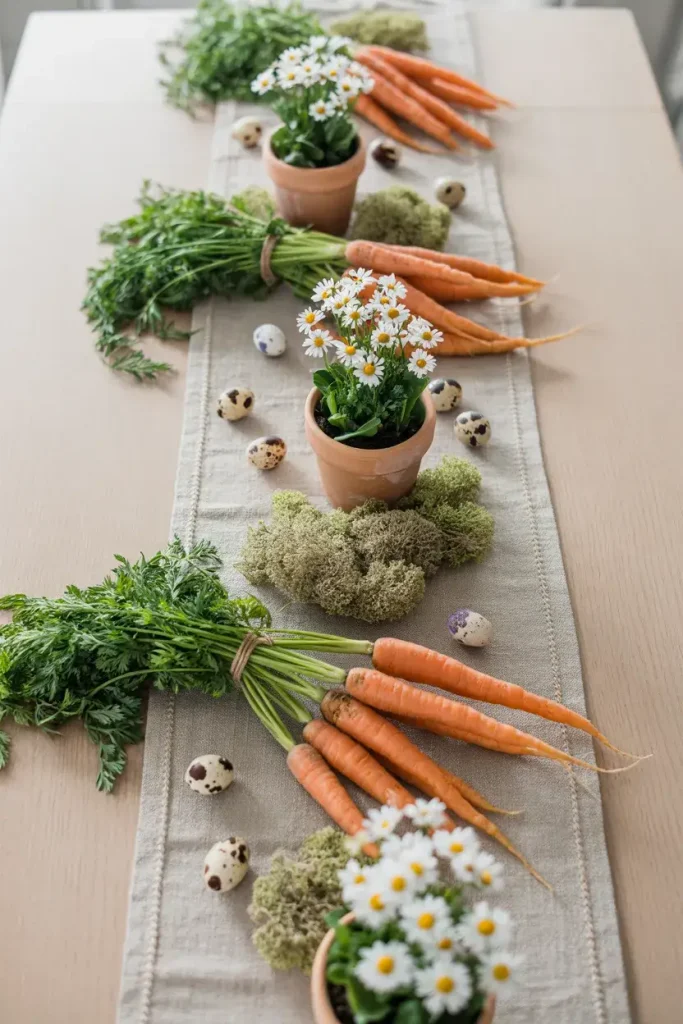
1. Lay the foundation: Bring a fresh garden feeling to your Easter table with an oatmeal linen runner. Spread it neatly down the center, leaving enough room for plates and glasses.
2. Arrange fresh carrots: Wash and dry six to eight small carrots with their leafy tops attached. Group them in two loose bundles on a clean, shallow tray.
3. Add miniature flower pots: Position three tiny terracotta pots filled with white daisies between the carrot bundles. Vary their placement to create a relaxed garden arrangement.
4. Finish with Easter details: Scatter a few decorative speckled eggs around the pots. Add small patches of preserved moss for texture without overcrowding the display.
Carrots bring a playful Easter touch without relying on plastic decorations. For a tidier look, choose slim carrots with fresh green tops and tuck the roots onto a washable tray hidden beneath the runner folds. Refrigerate the vegetables after the meal rather than leaving them out for days.
Tiered Easter Egg Stand
| Design Detail | Flat Egg Platter | Tiered Egg Stand |
|---|---|---|
| Table space | Needs more surface area | Uses a smaller footprint |
| Visual height | Low and simple | Adds vertical interest |
| Egg arrangement | Eggs spread across one level | Eggs displayed on two levels |
| Decorative accents | Limited space between eggs | Room for flowers and greenery |
| Best placement | Center of a small table | End of a long dining table |
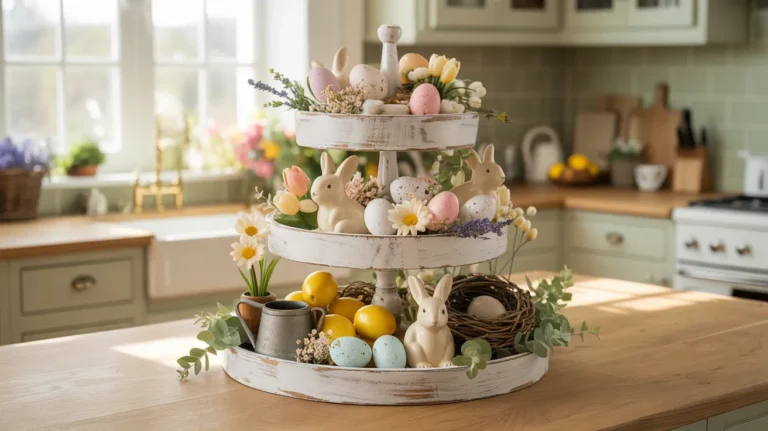
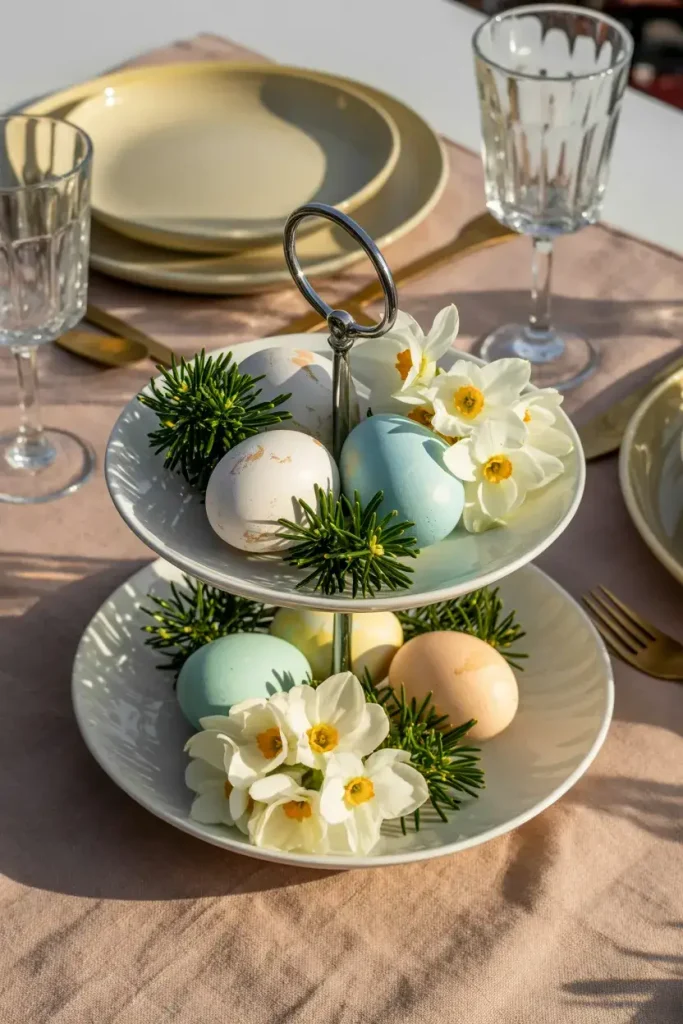
A tiered stand gives pastel eggs an eye-catching place without spreading decorations across the table. Keep heavier eggs on the lower tier and use lightweight faux blooms above. Place it near the end of a long table, not directly between guests, so the height never interrupts conversation.
Floating Daisy Bowls
DO
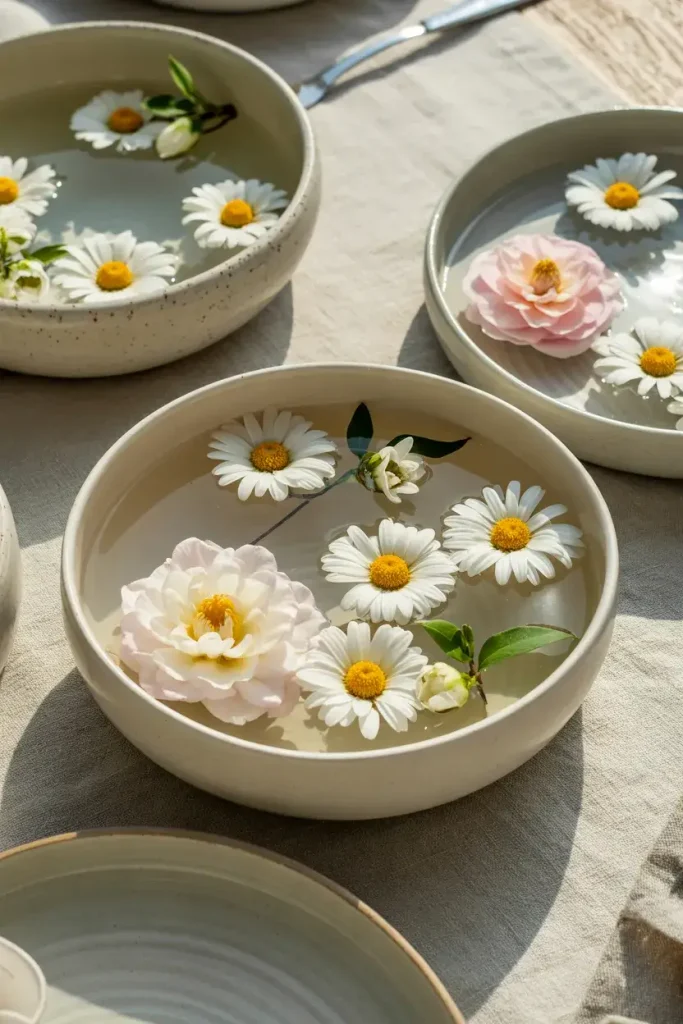
- Choose wide, shallow ceramic bowls to create a delicate floating flower display.
- Float freshly cut daisy heads alongside a few pale pink blooms for gentle color contrast.
- Use clear water and leave open spaces between flowers so individual petals remain visible.
- Arrange the bowls in a loose line down the center of the table.
DON’T
- Overfill the bowls with flowers, as crowded petals lose their delicate appearance.
- Use deep containers that hide the floating blooms from seated guests.
- Place bowls too close to serving platters where they might get knocked over.
- Prepare the arrangement too early, since delicate flowers can wilt in water.
Floating flowers add color without towering over plates or blocking anyone’s view. Set two or three bowls along the center of the table, leaving room for serving dishes. Replace the water shortly before guests arrive so it looks clear and fresh, and keep petals away from food.
Discover More: 21 Beautiful Spring Centerpieces for Kitchen Table Decor
Vintage Teacup Florals
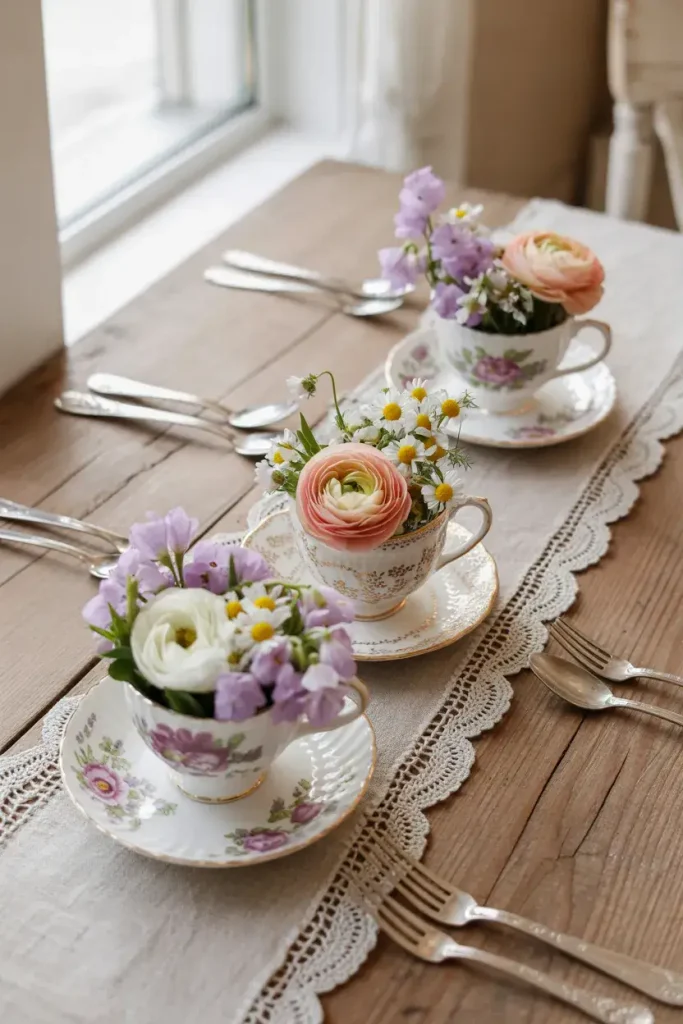
Result: A charming Easter table filled with miniature flower arrangements and vintage character.
Cost: Low to moderate, especially with thrifted teacups and seasonal flowers.
Time: Approximately 15 to 20 minutes for three small arrangements.
Best For: Small Easter brunch tables, cottage-style dining rooms, and vintage spring decorations.
Tiny teacup bouquets bring charming detail to an Easter brunch, especially when the table is too narrow for a large vase. Fill each cup with a little water, then add three to five short stems. Mix cup patterns but repeat one flower color throughout to make the arrangement feel intentional.
Blossom Branch Tree
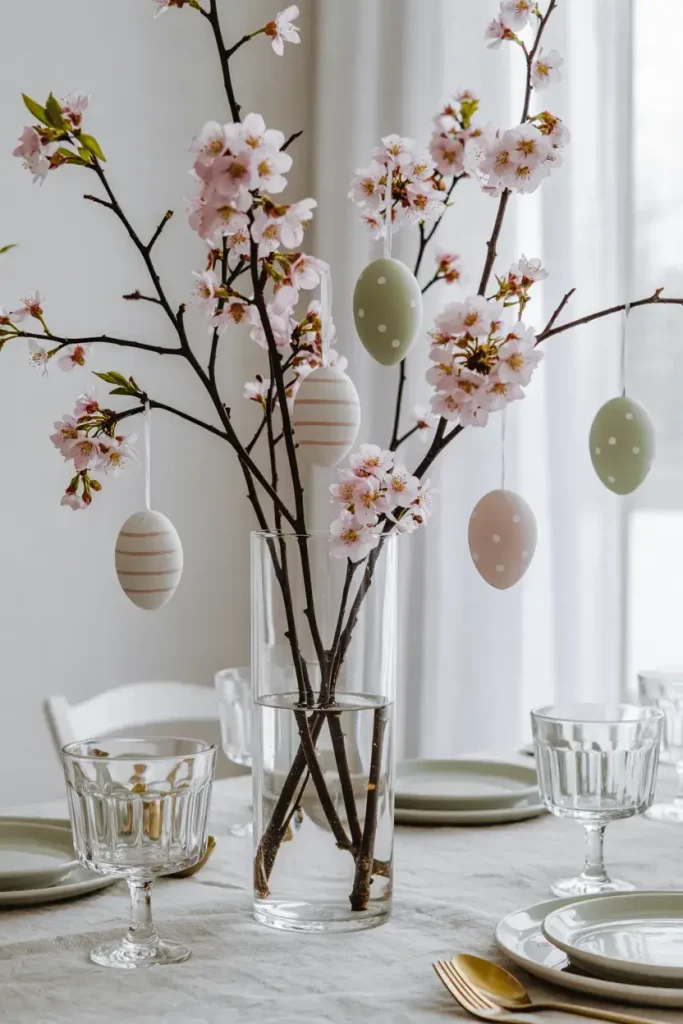
Flowering branches draw the eye upward and add Easter detail to a simple table. Start with three to five slender faux cherry blossom branches in a weighted glass vase. Hang a few lightweight pastel egg ornaments from the outer twigs, spacing them so every shape remains visible.
Keep the base uncluttered with a plain linen runner and a small scattering of matching eggs. Because tall branches can interrupt sightlines, position the vase at the far end of a long table or on a nearby sideboard. Secure the branches firmly so hanging ornaments cannot tip the display.
Lemon Blossom Bowl
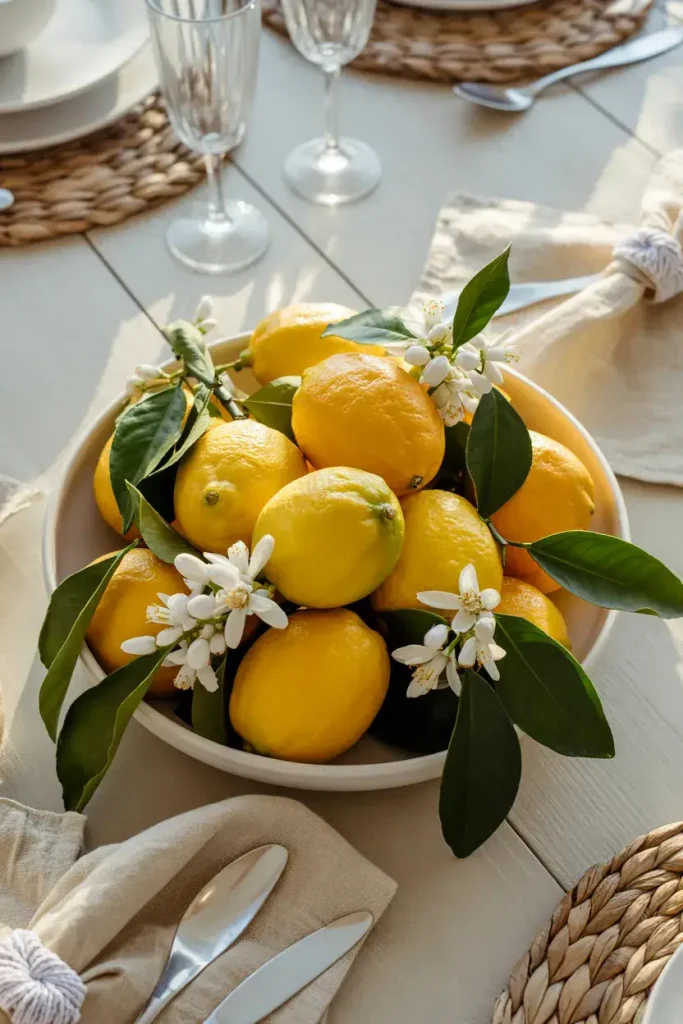
- Start with sunshine yellow: Lemons bring instant energy to a spring table, even when the rest of the decor is neutral. Choose eight to ten small, unblemished lemons.
- Choose a wide bowl: Use a 10-inch ceramic or wooden bowl to keep the arrangement below eye level.
- Build a leafy base: Tuck short citrus branches or faux greenery around the rim, keeping most of the fruit visible.
- Add white blossoms: Slip a few small flower stems into water-filled floral tubes hidden between the lemons.
- Repeat the colors: Pair the centerpiece with pale yellow napkins and simple white dinnerware for a coordinated spring setting.
The strongest citrus displays feel abundant but stay easy to move when it’s time to serve lunch. Use firm lemons and avoid placing cut fruit directly against flowers. After the gathering, return the lemons to the kitchen and compost any tired greenery instead of throwing away the whole arrangement.
Wheatgrass Egg Garden
Quick Tip:
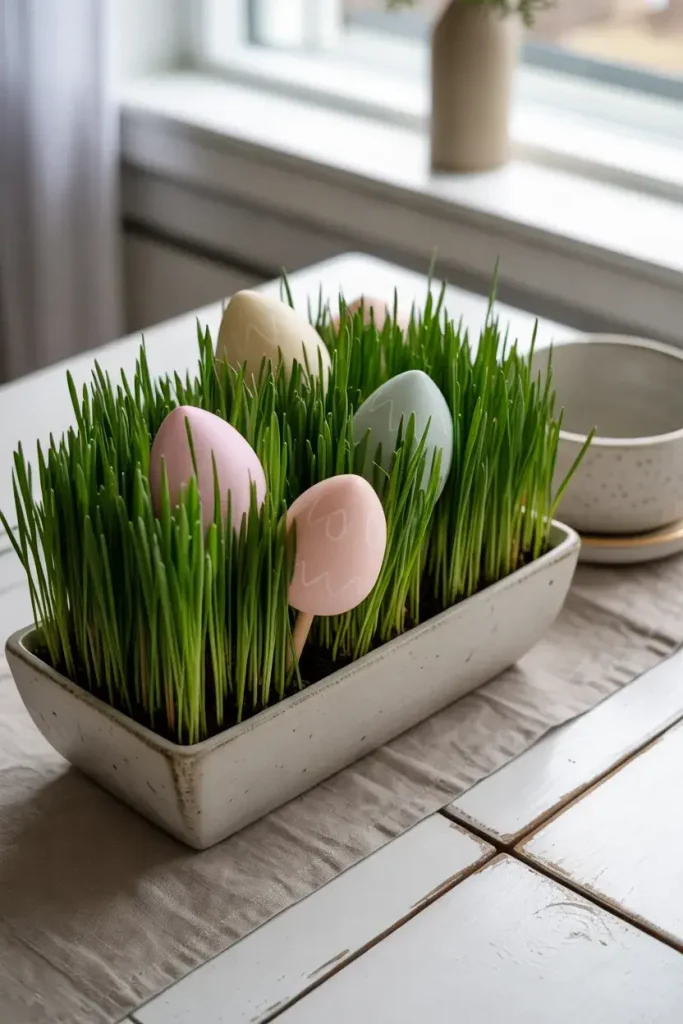
Growing green grass between pastel eggs gives the centerpiece a fresh, storybook look. Choose a shallow wheatgrass tray with dense, upright growth rather than sparse shoots. Press lightweight faux eggs gently between the blades and keep the soil covered so nothing spills onto the table.
A living grass centerpiece adds height and texture without blocking conversation. Set the planter on a waterproof saucer to protect your table, and remove eggs before watering. Grass may need several days to grow, so buy a ready-grown tray if your Easter gathering is just around the corner.
Daffodil Pot Trio
BEFORE:
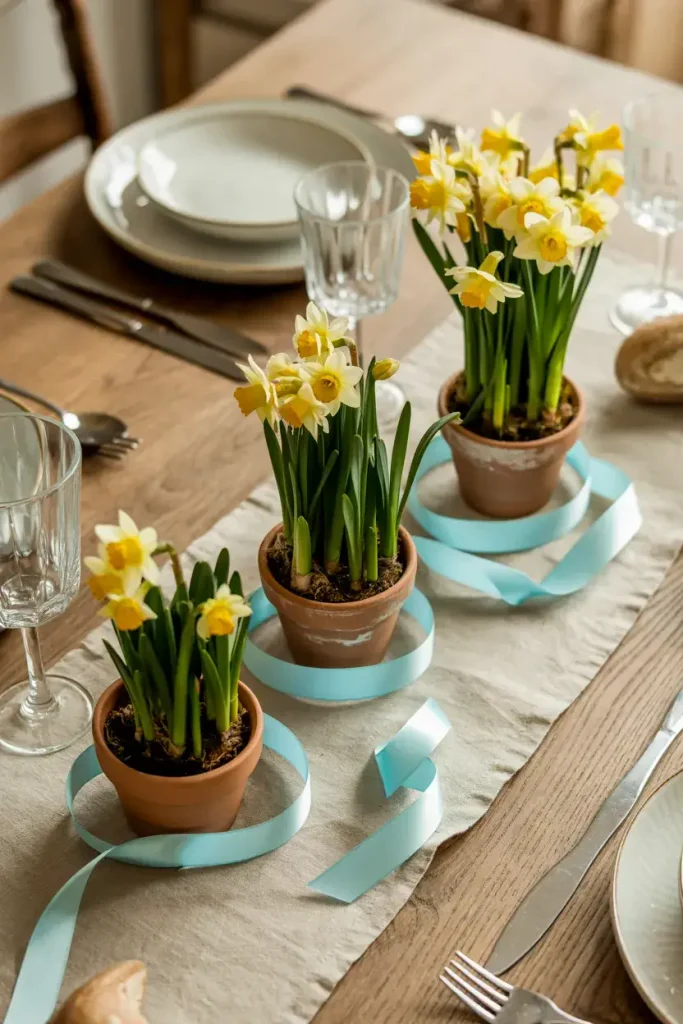
A row of supermarket daffodil pots can feel more like a windowsill than a table centerpiece. Plastic nursery containers clash with a carefully set Easter table, and uneven pot heights can make the display look scattered.
AFTER:
Slide each nursery pot into a matching 4-inch terracotta planter and tie on a narrow pale blue ribbon. Space three planters evenly along a linen runner, rotating the flowers so blooms face both sides of the table.
Grouping daffodils in matching pots gives an ordinary table a coordinated spring look without buying a large bouquet. Water the pots lightly before setting them on saucers, and keep them away from food. Daffodils are toxic if eaten, so supervise children and pets around the display.
Cabbage Flower Vase
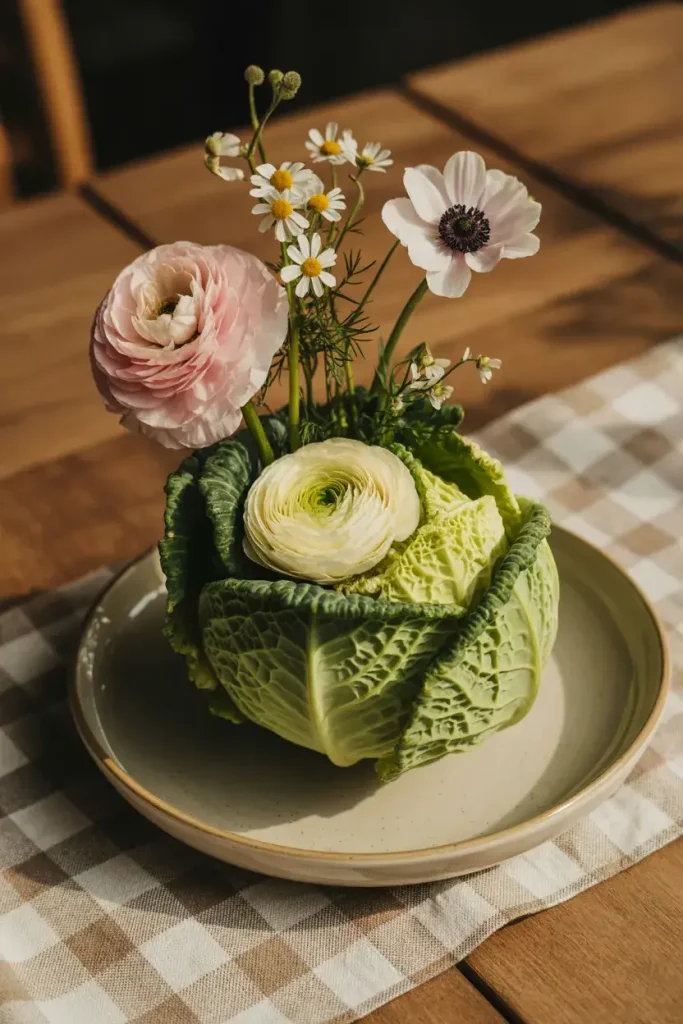
1. Choose a sturdy cabbage: A cabbage filled with spring flowers makes an unexpected centerpiece that immediately catches the eye. Pick a firm, wide savoy cabbage with a stable base.
2. Create the opening: Carefully hollow out the center with a small knife, making enough space for a narrow glass jar without cutting through the bottom.
3. Add fresh flowers: Place a watertight jar inside, fill it with water, and arrange short ranunculus, anemone, and chamomile stems at varying heights.
4. Protect the table: Set the cabbage on a ceramic plate and position it along a linen runner, keeping the leaves clear of serving dishes.
The hidden jar keeps water contained and flowers fresh while the cabbage provides an earthy, garden-inspired look. This display works best when assembled the morning of your gathering because cut cabbage edges can soften over time. Refrigerate the cabbage separately if you prepare the flowers ahead.
Hydrangea Basket Blooms
| Design Detail | Fresh Hydrangeas | Faux Hydrangeas |
|---|---|---|
| Appearance | Natural petals and soft color variations | Consistent colors and fuller shapes |
| Preparation | Requires water and trimmed stems | Needs simple arranging only |
| Longevity | Best for a short seasonal display | Reusable for multiple celebrations |
| Maintenance | Water must be checked regularly | Occasional dusting is enough |
| Best Choice | Fresh spring gatherings | Long-lasting seasonal decor |
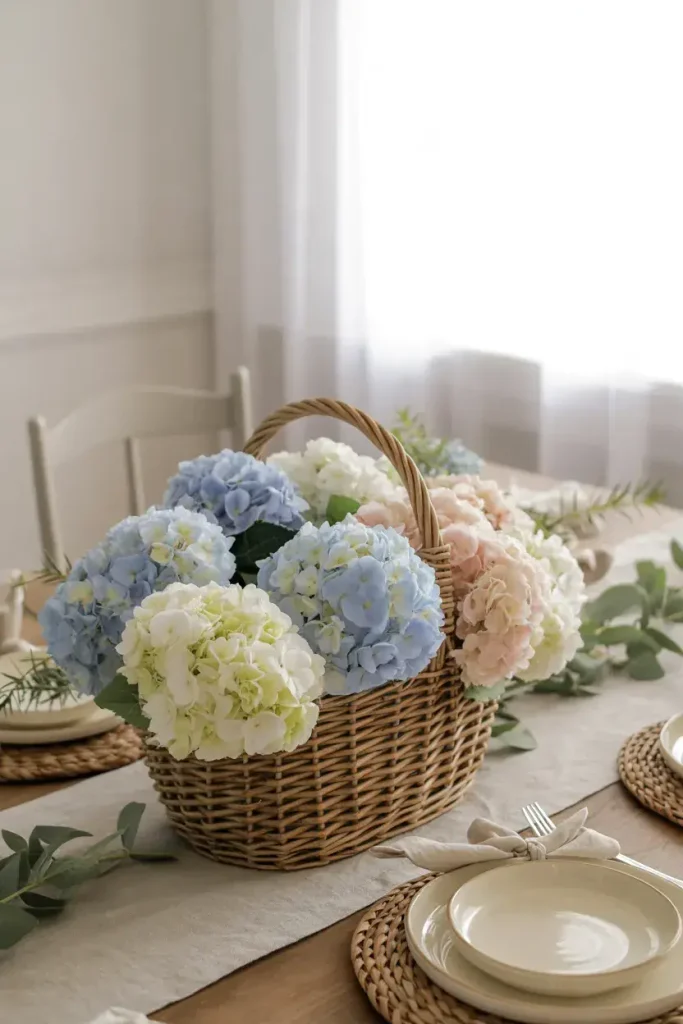
Hydrangeas give an Easter table a full, cloudlike centerpiece with only a few stems. For fresh blooms, tuck a watertight jar inside the basket so the stems stay hydrated. Choose a low basket with a broad opening, and keep the largest flower heads beneath seated guests’ eye level.
Pressed Flower Egg Bowl
DO
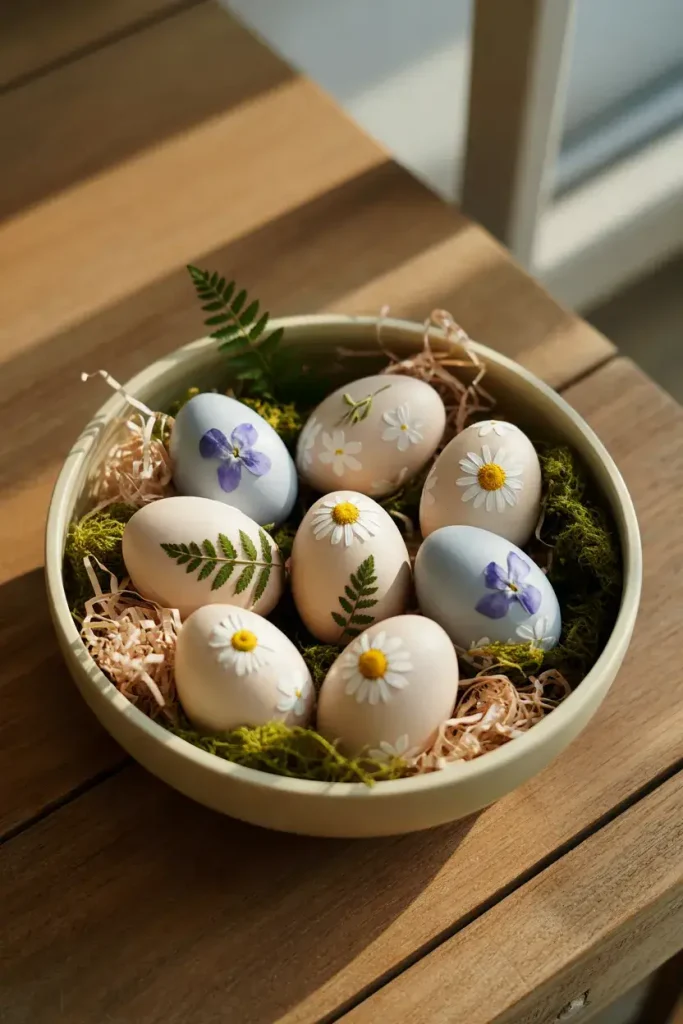
- Apply delicate pressed flowers to smooth papier-mâché eggs using a thin layer of decoupage glue.
- Repeat two or three flower varieties to keep the decorated eggs visually coordinated.
- Allow every egg to dry completely before arranging it in a shallow ceramic bowl.
- Use crinkled kraft paper as a soft base to protect the finished decorations.
DON’T
- Don’t use fresh flowers because their moisture can cause discoloration beneath the glue.
- Don’t apply thick glue layers that might hide the details of delicate petals.
- Don’t stack damp eggs because the decorations may stick together and tear.
- Don’t place the finished arrangement near drinks where spills could damage the paper.
Pressed flowers add delicate details that make this arrangement especially attractive in close-up photographs. Mix pale blue and ivory eggs with tiny purple blooms for gentle contrast. The bowl can become part of your spring decor after Easter, provided you store the finished eggs somewhere dry.
Chocolate Egg Cloche
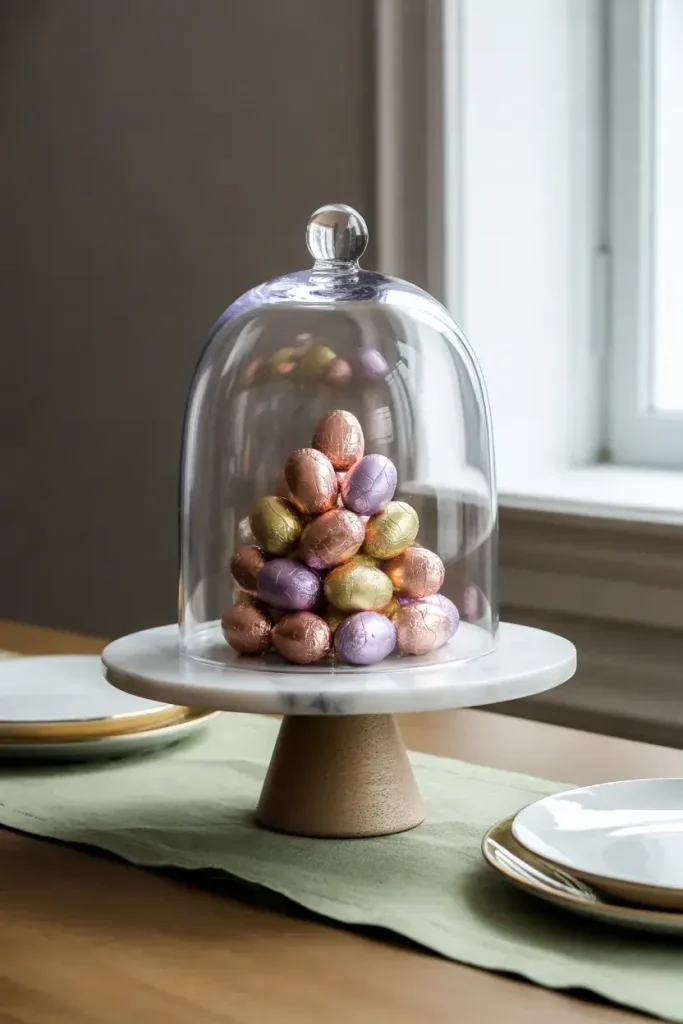
Result: A jewel-like chocolate display that doubles as a sweet ending to Easter brunch.
Cost: Low to moderate, depending on the chocolates and whether you already own a cloche.
Time: Around 10 minutes.
Best For: Compact dining tables and dessert-focused Easter gatherings.
Start with a clean, dry cake stand and stack individually wrapped chocolates in a small mound. Lower the glass dome carefully so it does not touch the top eggs. Keep the display away from sunny windows and warm dishes, where chocolate could soften before guests are ready to enjoy it.
Gingham Jar Posies
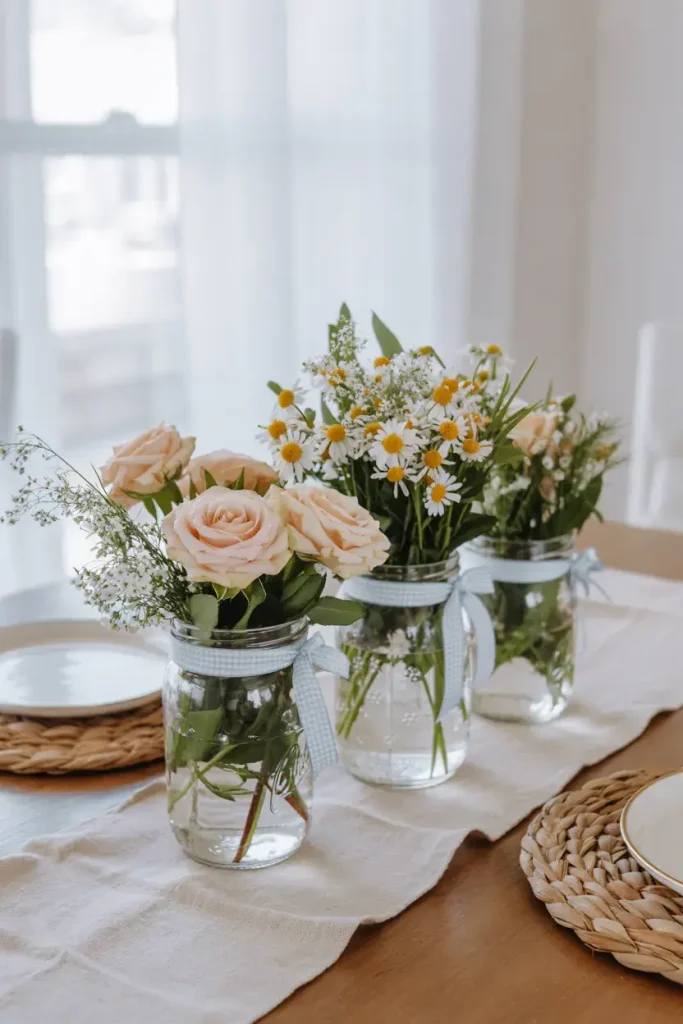
Nothing makes a spring table feel more personal than small jars of flowers that look freshly gathered. Choose three matching mason jars and fill each halfway with cool water. Add a few peach spray roses, short chamomile stems, and wisps of greenery, keeping the tallest stems under 12 inches.
Tie a narrow gingham ribbon around each jar, then space them along a cream runner instead of clustering them in the middle. Repeating the same flowers makes the display feel coordinated, while the separate jars leave room for serving dishes. Refresh the water before your Easter meal.
Spring Herb Basket
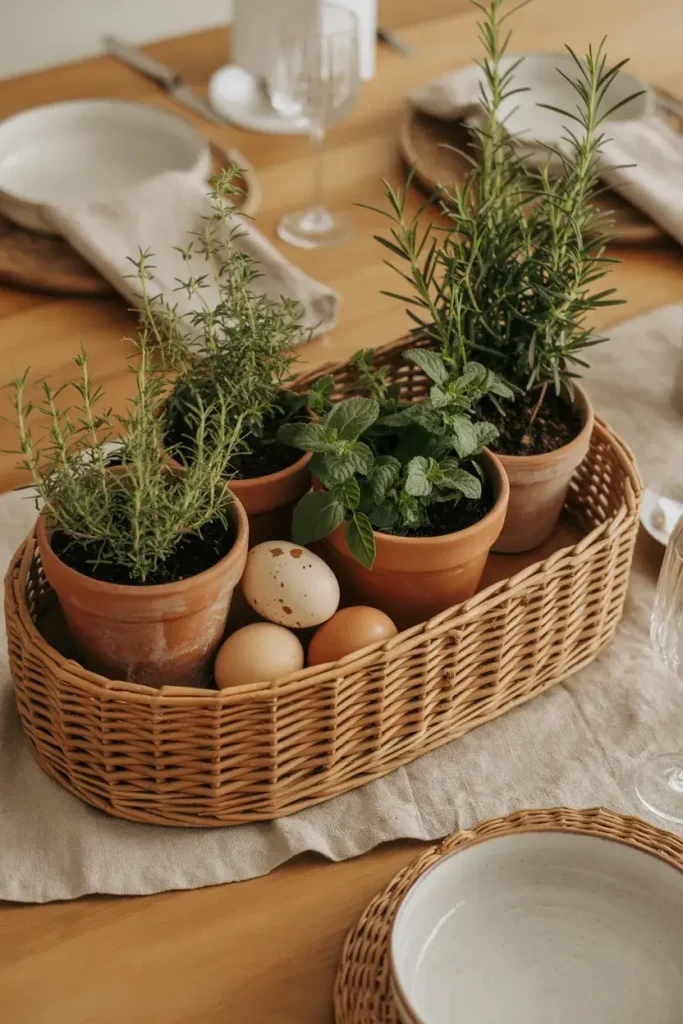
- Start with fragrant greenery: A fresh herb basket brings natural color and a lovely garden scent to your Easter table. Choose compact rosemary, thyme, and mint plants with healthy leaves.
- Pick a shallow basket: Use an oval wicker basket approximately 12 to 14 inches long to keep the arrangement compact.
- Arrange miniature pots: Position three small terracotta pots inside the basket, placing the tallest rosemary plant toward the back.
- Fill empty spaces: Tuck folded natural linen around the pots and nestle a few decorative speckled eggs between them.
- Protect your furniture: Place waterproof saucers beneath the pots before setting the basket on your dining table.
Keep the herbs in their nursery pots so they can return to a sunny windowsill after brunch. If you plan to cook with them, choose edible plants grown without unsuitable pesticides and wash leaves before use. The basket stays useful long after the Easter decorations are packed away.
Spring Bulb Terrarium
Quick Tip:
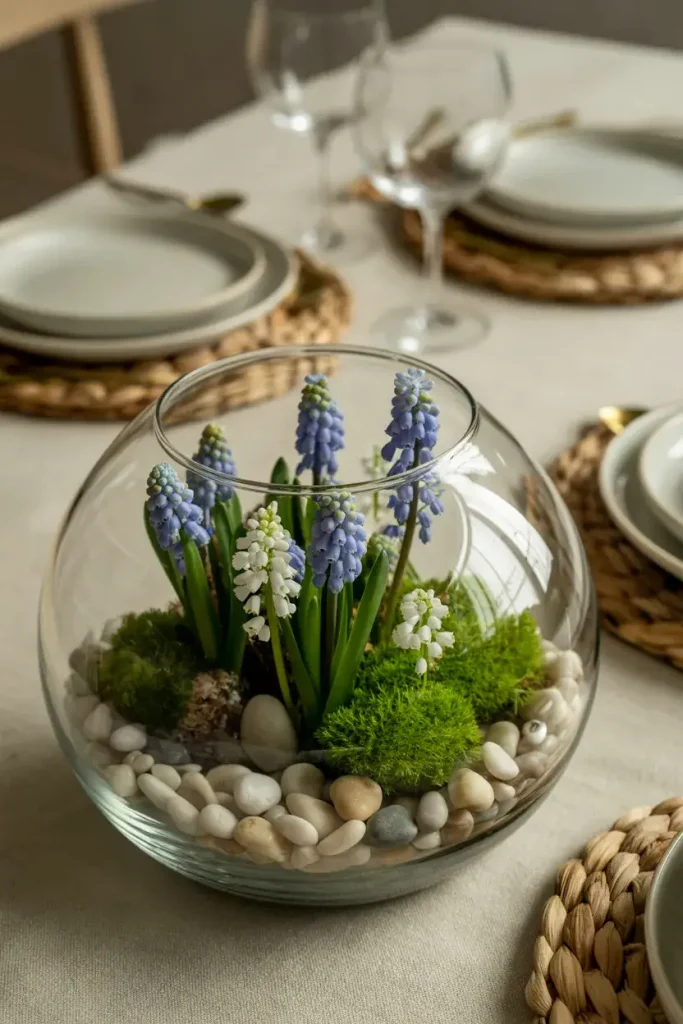
Fresh spring bulbs give a table a tiny garden feeling without a towering bouquet. Nest small nursery pots of grape hyacinths inside a wide glass bowl, then conceal their rims with preserved moss and smooth pebbles. Leave the plants in their pots so excess water stays controlled.
Choose a bowl at least 10 inches wide and keep the blooms below seated eye level. Place a waterproof liner under the pots before adding decorative stones. Grape hyacinths prefer bright, indirect light, so move the arrangement near a window after the meal and water each pot separately.
Butterfly Floral Garland
BEFORE:
A long Easter table can feel bare between place settings, even with pretty dishes. Tall bouquets solve the empty space but interrupt eye contact and crowd shared plates.
AFTER:
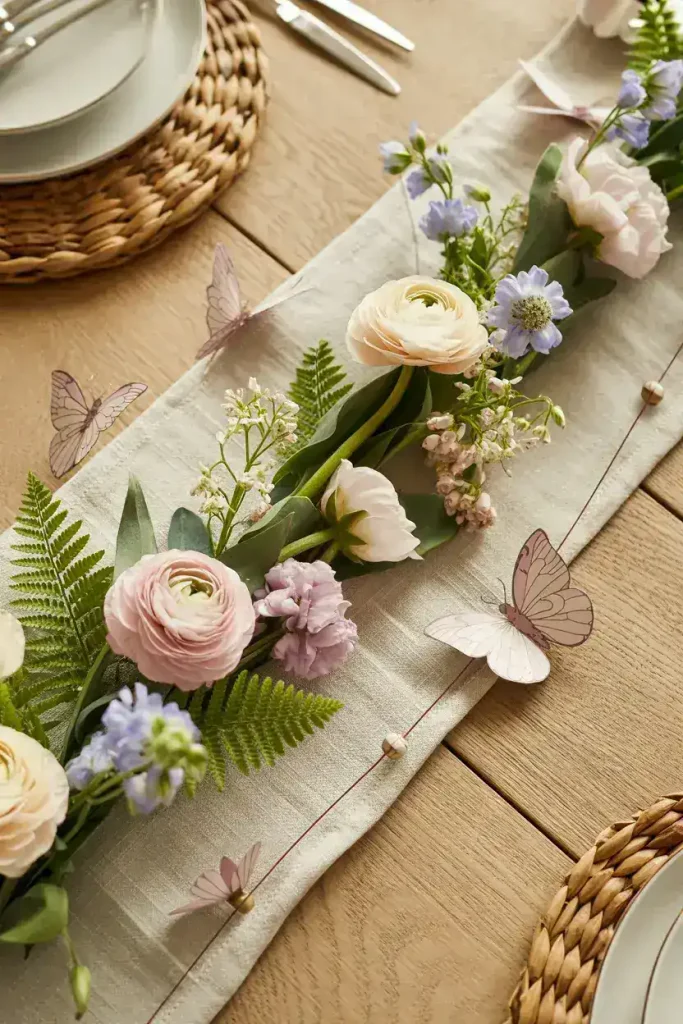
A slim floral garland fills the center with soft color while staying low enough for conversation. A handful of pastel paper butterflies adds a playful Easter detail without making the design feel crowded.
Lay a narrow faux greenery garland along the runner, then tuck short faux flower stems into it at uneven intervals. Attach paper butterflies to floral wire so they hover just above the blooms. Among easter centerpiece ideas for long tables, this approach is easy to shorten or divide around serving dishes.
Conclusion
You don’t need a big budget or a perfectly matched set of dishes to make Easter feel special. The best easter centerpiece ideas work with what you have, whether that’s a favorite pitcher, a few fresh stems, or a basket of decorative eggs. Choose a design that suits your table size, keep sightlines open, and leave space for the food everyone came to enjoy.
Start with one idea this season, or combine two small arrangements for a personal touch. Save this post on Pinterest for later, and share it with a friend planning Easter brunch. Your spring table is ready to bloom.