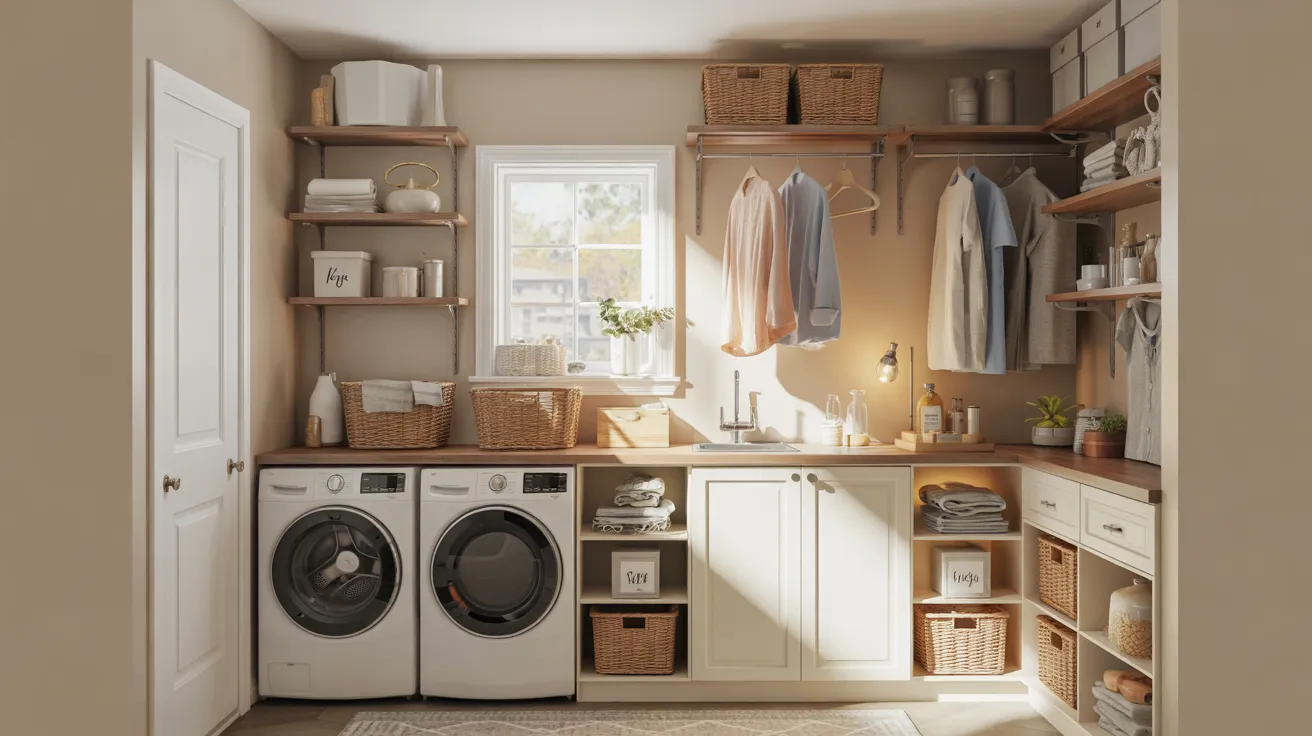
22 Small Laundry Room Organization Ideas for a Beautiful Makeover
A small laundry room can still feel organized, stylish, and easy to use.
The right storage choices can turn a crowded corner into a practical home area.
These small laundry room organization ideas help create more space without major renovations.
This guide shares simple ways to arrange laundry supplies, improve storage, and make daily chores feel easier. From wall shelves and baskets to hidden storage solutions, each idea focuses on using every inch wisely. Many homeowners struggle with limited space, but thoughtful organization can make a noticeable difference. In my experience, the best laundry rooms are not always the largest ones, they are the spaces where everything has a clear place. These ideas combine function, style, and realistic solutions for everyday living.
Wall Mounted Shelves

Small laundry spaces often struggle with limited storage, but empty wall areas can solve that problem. Floating shelves above appliances create a practical place for detergent, baskets, and everyday supplies while keeping the floor area open.
A few organized shelves can make laundry tasks feel easier because everything has a visible home. In my experience, open storage works best when baskets hide smaller items and frequently used products stay within easy reach.
Laundry Basket Station

- Add separate baskets for whites, colors, and delicate fabrics.
- Choose slim hampers that fit between appliances or cabinets.
- Use labeled containers to help every family member sort laundry.
- Keep empty baskets stacked vertically when not needed.
A dedicated basket station makes sorting faster and keeps piles from spreading across the room. These small laundry room organization ideas are especially helpful for busy households where laundry happens often. A clear sorting system reduces daily mess and creates a calmer workspace.
Overhead Cabinet Storage

Quick Tip:
Store items you use less often on higher shelves, such as extra detergent bottles, seasonal supplies, or backup cleaning products. Keep daily essentials at eye level so your laundry routine stays quick and convenient.
Cabinet storage helps create a cleaner appearance by hiding supplies behind closed doors. It works well in compact rooms where every inch matters. Choose adjustable shelves or storage bins inside cabinets to prevent small products from getting lost at the back.
Slim Rolling Cart

BEFORE:
Laundry supplies often end up scattered on top of machines or crowded inside cabinets. Small rooms can feel messy when everyday products do not have a dedicated storage spot.
AFTER:
A slim rolling cart fills unused gaps between appliances while keeping supplies organized. The movable design allows easy access and helps maintain a clean countertop-free workspace.
I’ve seen this solution work well in narrow laundry areas where permanent storage is not possible. Measure the gap first, then choose a cart that fits comfortably without blocking doors or vents.
Fold Down Drying Rack
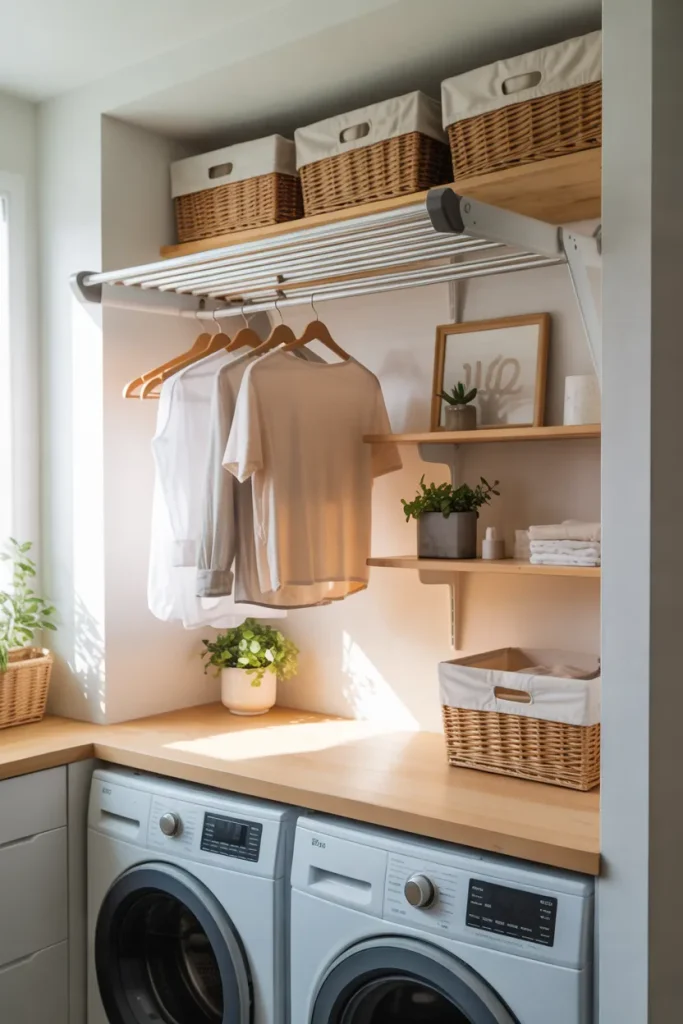
- Select a fold down rack that matches your available wall space.
- Install it above appliances or near a laundry sink.
- Use it for delicate clothing, towels, or items needing air drying.
- Fold it away when not in use to keep the room open.
A fold down drying rack adds function without taking valuable floor space. It is especially useful for apartments and small homes where every area needs to serve multiple purposes. This simple addition keeps delicate clothes organized while maintaining a tidy laundry routine.
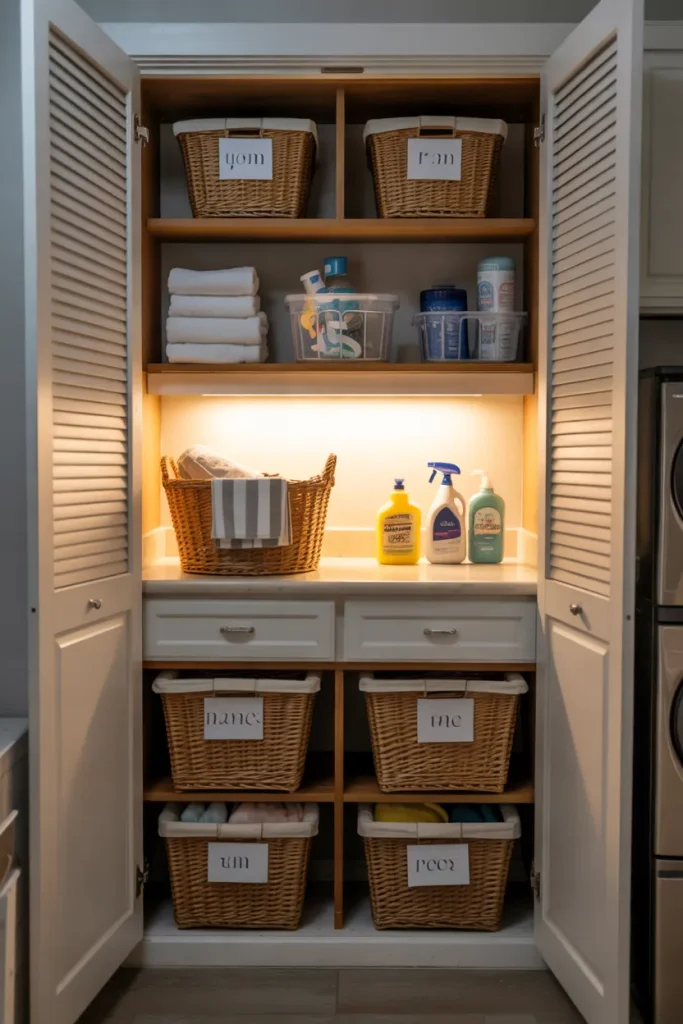
Hidden Storage Bins
| Feature | Option A | Option B |
|---|---|---|
| Storage Style | Open shelves | Closed storage bins |
| Appearance | Items visible | Cleaner hidden look |
| Maintenance | More frequent organizing | Easier daily upkeep |
Hidden bins help control visual clutter in compact laundry spaces. They are useful for storing extra supplies, lost socks, cleaning cloths, and small accessories. Choose clear labels so items remain easy to find while keeping the room looking neat and organized.
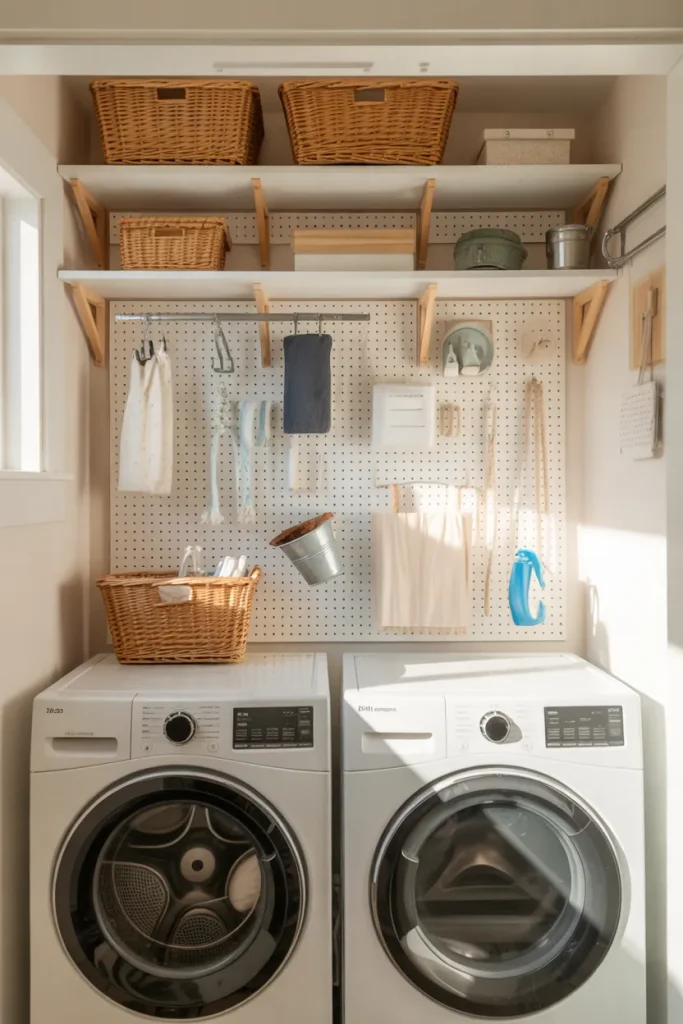
Pegboard Storage Wall
DO:
- Install hooks for frequently used laundry tools.
- Add small baskets for clips, brushes, and accessories.
- Arrange items by how often they are used.
- Leave some open space for future storage needs.
DON’T:
- Avoid hanging too many heavy items on one section.
- Don’t place rarely used products in the easiest-to-reach spots.
- Avoid mixing random colors that create visual clutter.
- Don’t block access to appliances or cabinets.
A pegboard creates flexible storage that changes as your needs change. I’ve noticed it works especially well in small laundry rooms because vertical space becomes useful without taking away walking area. It also makes everyday tools easier to find during busy laundry days.
Stacked Appliance Layout
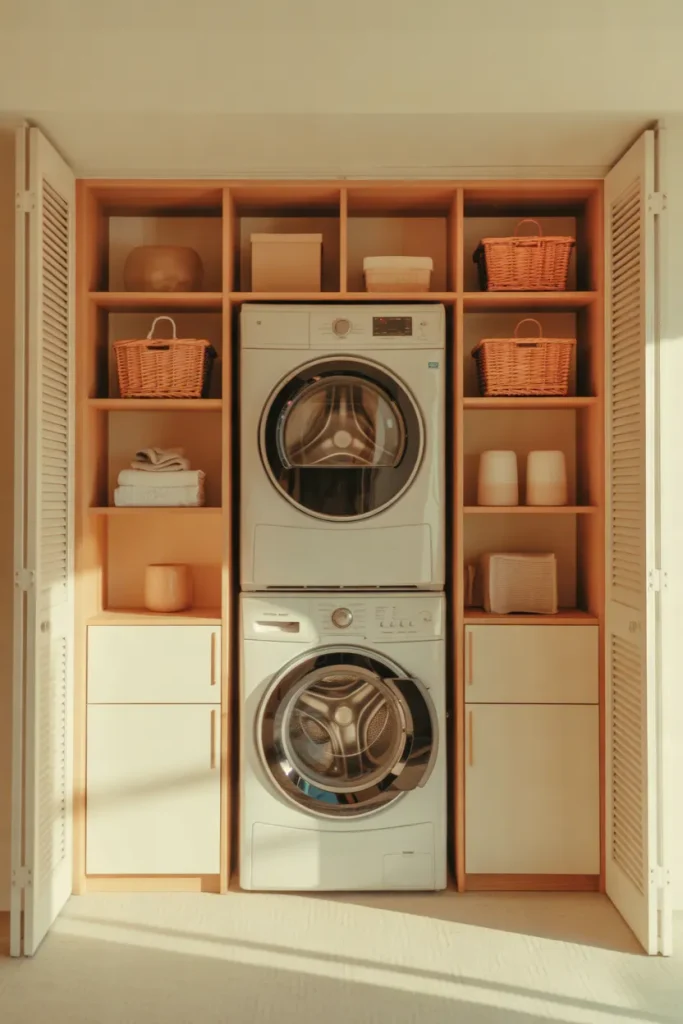
Cost: Medium | Time: One weekend | Skill Level: Professional Installation | Best For: Very small rooms
A stacked washer and dryer setup creates valuable floor space for storage or folding areas. It allows narrow laundry rooms to feel more open while making room for shelves, cabinets, or a small utility station.
I’ve seen many homeowners choose this layout when redesigning tight spaces because it improves movement around the room. Before changing appliance placement, check plumbing, electrical requirements, and ventilation needs for a safe installation.
Discover More: 22 Smart Small Bedroom Storage Ideas for Couples That Actually Work
Foldable Folding Station

A folding area can completely change how laundry tasks feel in a small room.
A compact foldable surface gives you space to organize clothes without taking over the entire area.
The best designs include hinges or wall mounted tables that disappear when not needed. I’ve tried this approach in small utility spaces, and it helps keep counters clear while creating a dedicated spot for sorting, folding, and stacking clean laundry.
Door Hanging Organizer
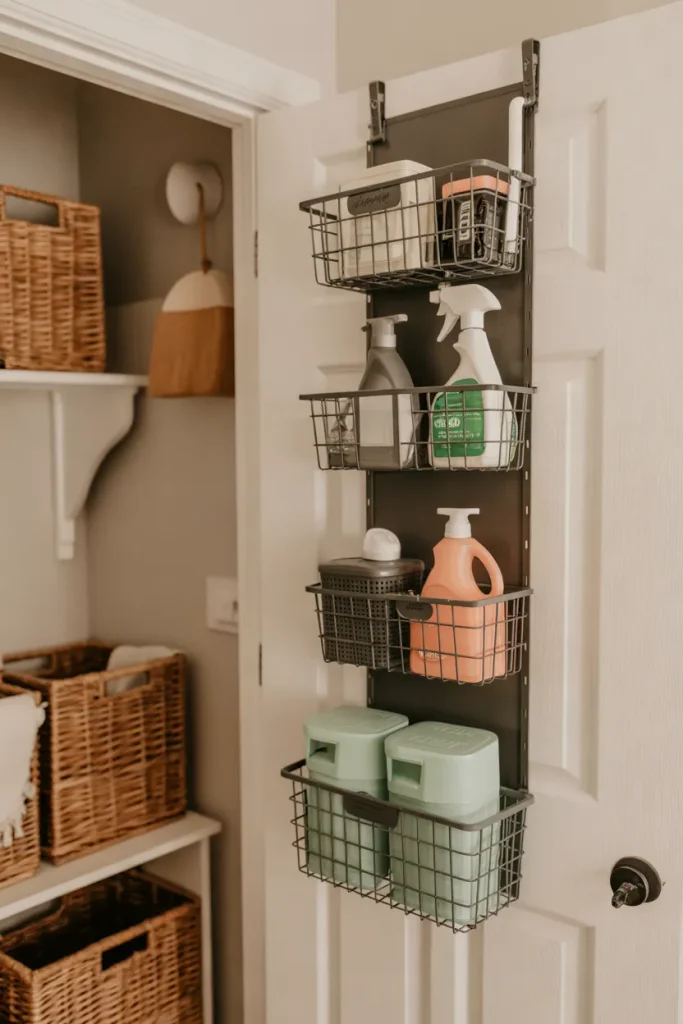
Use a Simple Setup:
- Choose an over-the-door organizer with strong hooks or pockets.
- Sort small laundry items into separate sections.
- Place frequently used products in the easiest pockets to reach.
- Keep heavier items stored lower to maintain balance.
A door organizer uses hidden space that often gets ignored in small laundry rooms. It is a practical choice for storing lightweight supplies without adding shelves or cabinets. This solution works especially well in apartments or narrow rooms where wall space is already limited.
Clear Storage Containers
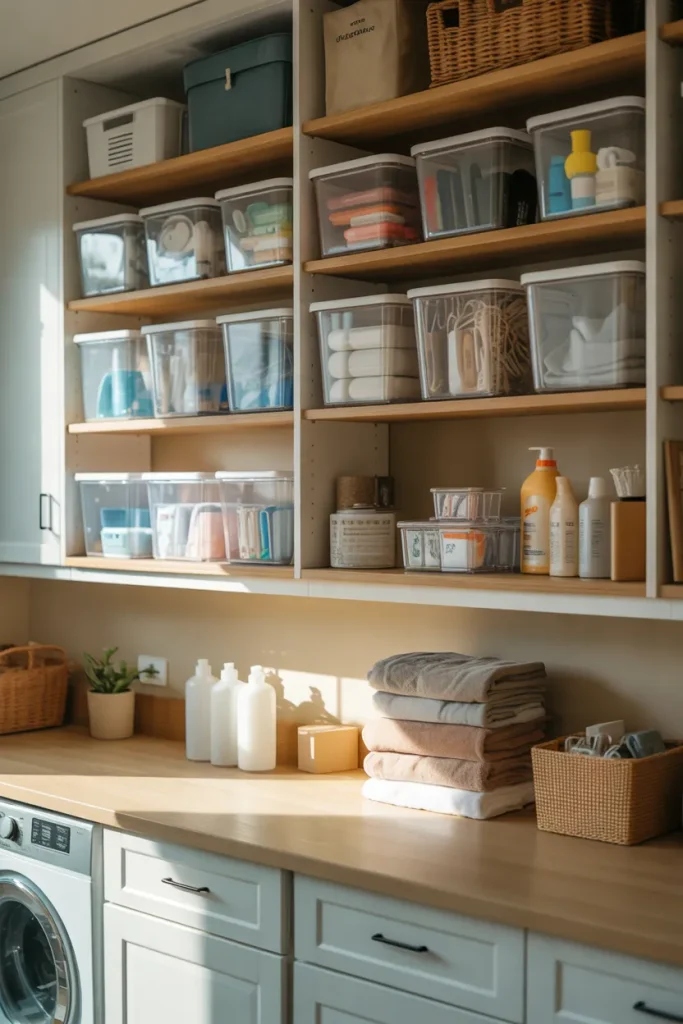
| Feature | Option A | Option B |
|---|---|---|
| Visibility | Items hidden in original packaging | Supplies easy to see |
| Organization | Mixed containers | Matching labeled containers |
| Maintenance | Harder to track supplies | Easier restocking |
Clear containers make laundry storage easier because you can quickly see what needs replacing. They create a cleaner appearance and help prevent buying duplicates of items already stored away.
Labels add another layer of organization, especially for shared laundry rooms. I’ve noticed families save time when everyone knows exactly where supplies belong, making the space easier to maintain throughout the week.
Built In Laundry Cabinets
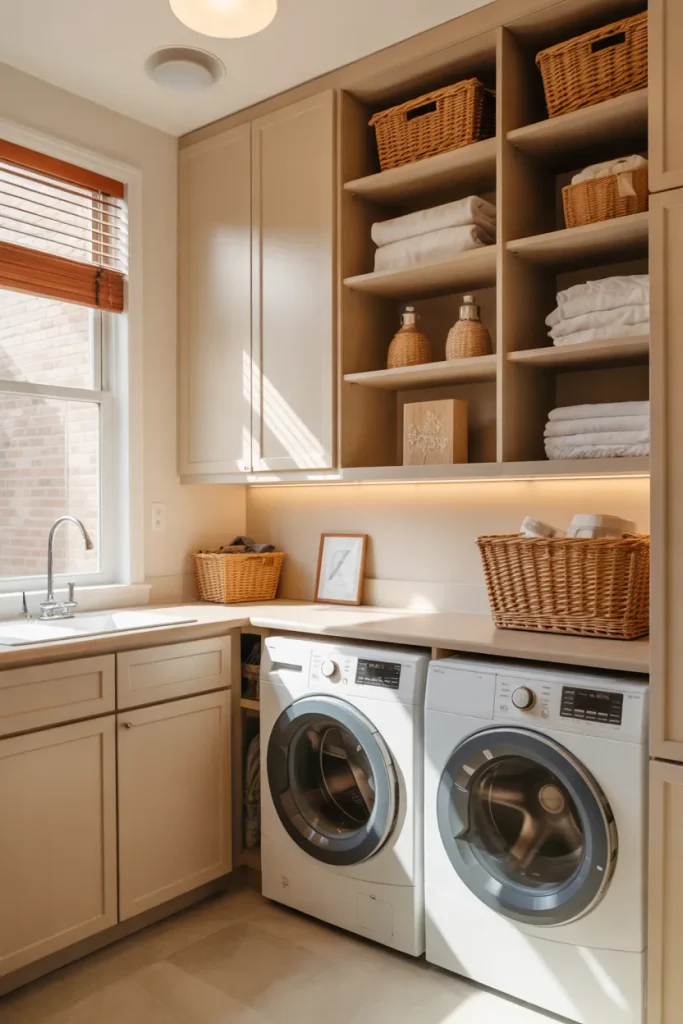
Quick Tip:
Use a mix of cabinet doors and open shelving for the best balance. Keep daily supplies in baskets on open shelves, while storing backup products and cleaning tools behind closed doors.
Built in cabinets create a polished laundry room design while maximizing every available inch. They are especially useful during renovations because they can be customized around appliance sizes and storage needs. A thoughtful cabinet layout keeps clutter hidden and gives even a small room a more finished appearance.
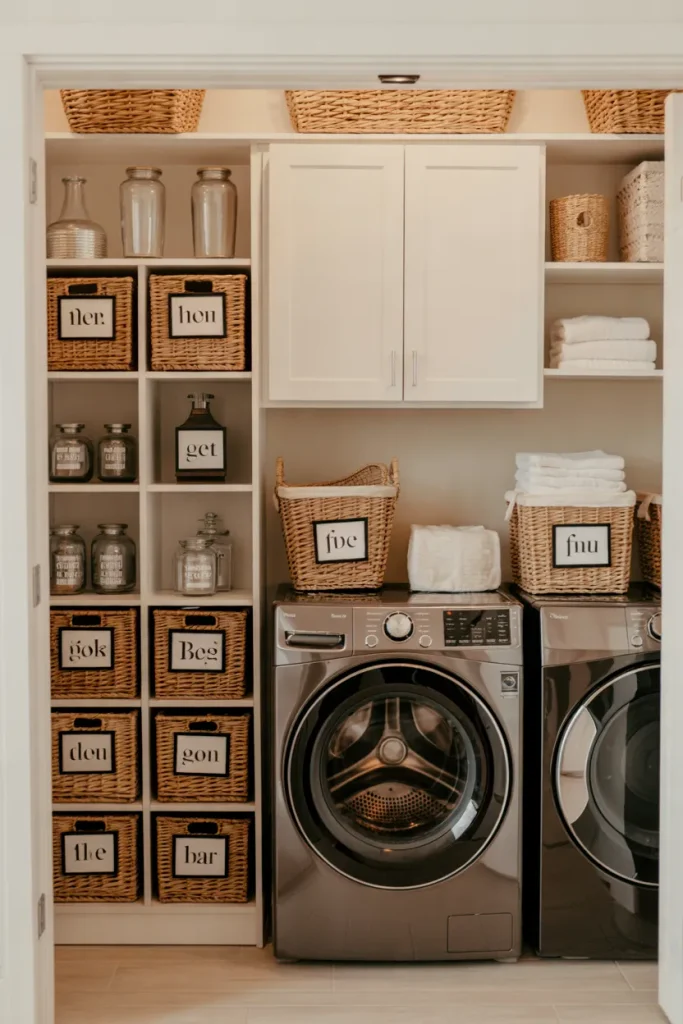
Laundry Room Labels
BEFORE:
Storage areas often become confusing when baskets, containers, and shelves hold mixed items. Finding detergent, cleaning cloths, or missing laundry accessories can take extra time.
AFTER:
Clear labels create an easy system where every item has a specific place. The room stays organized longer because everyone can quickly return supplies to the correct location.
Labels are a small detail that can improve daily routines in compact laundry spaces. In my experience, simple words like “delicates,” “supplies,” and “cleaning” are enough to make shared spaces easier to manage without adding complicated systems.
Corner Storage Shelves
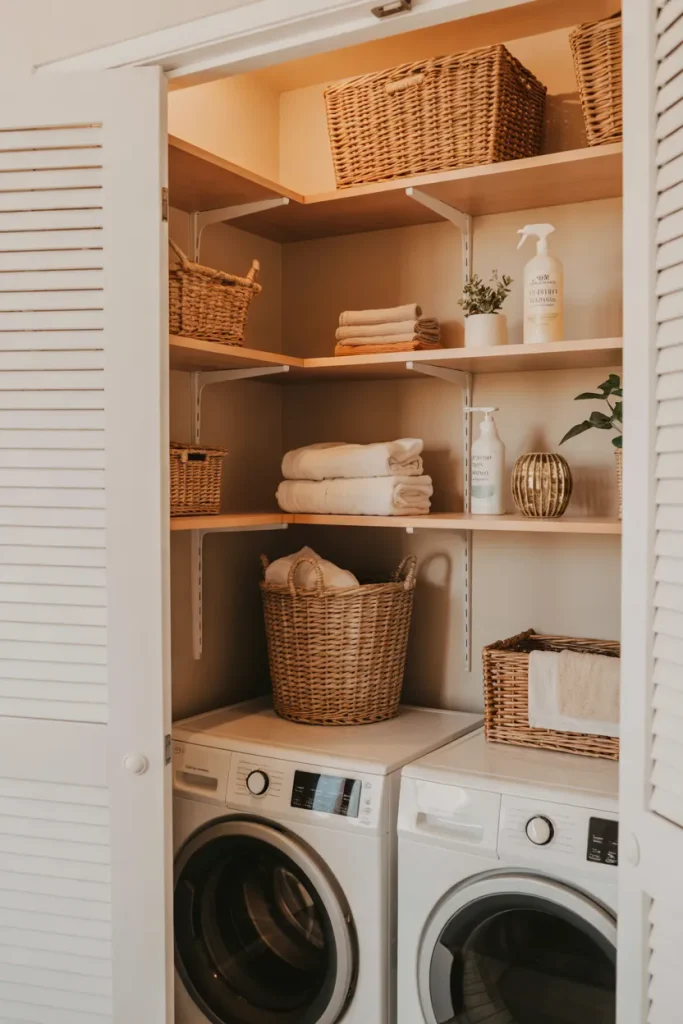
- Measure the unused corner space before choosing shelves.
- Select floating or tiered shelves that fit the room size.
- Place heavier items on lower shelves for stability.
- Use baskets to group smaller supplies together.
Corner shelves turn forgotten areas into useful storage zones. They are a smart choice for narrow laundry rooms where wall and floor space are limited. Keep the arrangement simple by combining practical items with a few decorative touches to maintain a clean appearance.
Laundry Sink Organization
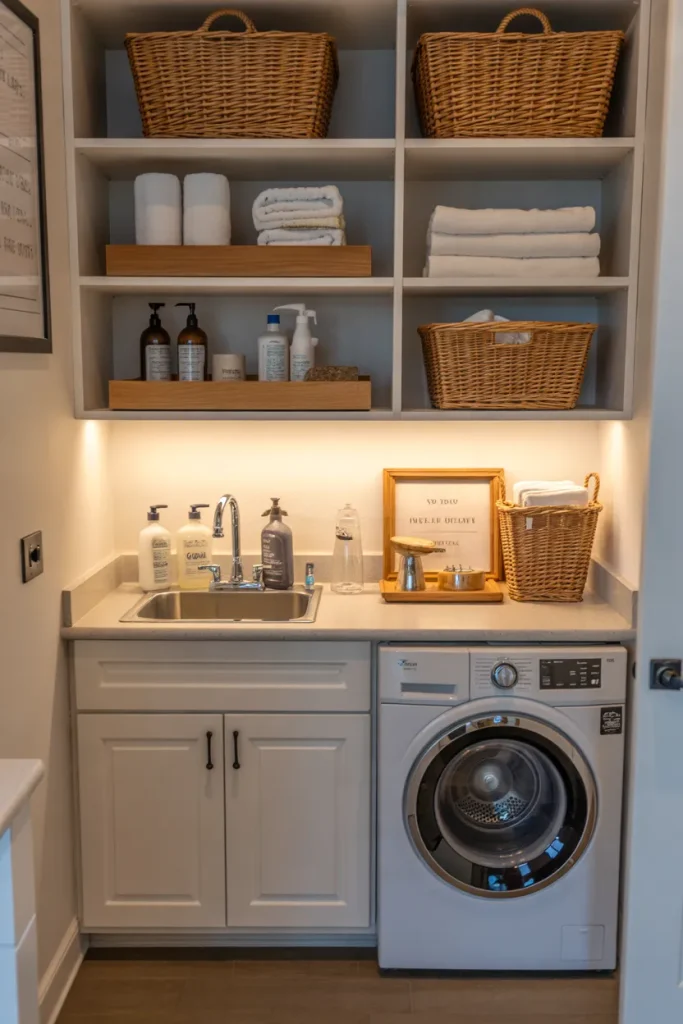
| Feature | Option A | Option B |
|---|---|---|
| Counter Area | Products spread around sink | Organized tray storage |
| Supplies | Mixed bottles | Grouped containers |
| Appearance | Busy workspace | Clean utility area |
A well-organized sink area makes laundry tasks easier, especially for handwashing delicate items or cleaning tools. Use trays, baskets, and matching containers to keep supplies together while leaving enough space for everyday use.
A tidy sink station helps the entire laundry room feel more functional. Keep frequently used products nearby and store occasional cleaning items underneath or inside cabinets to avoid crowding the counter.
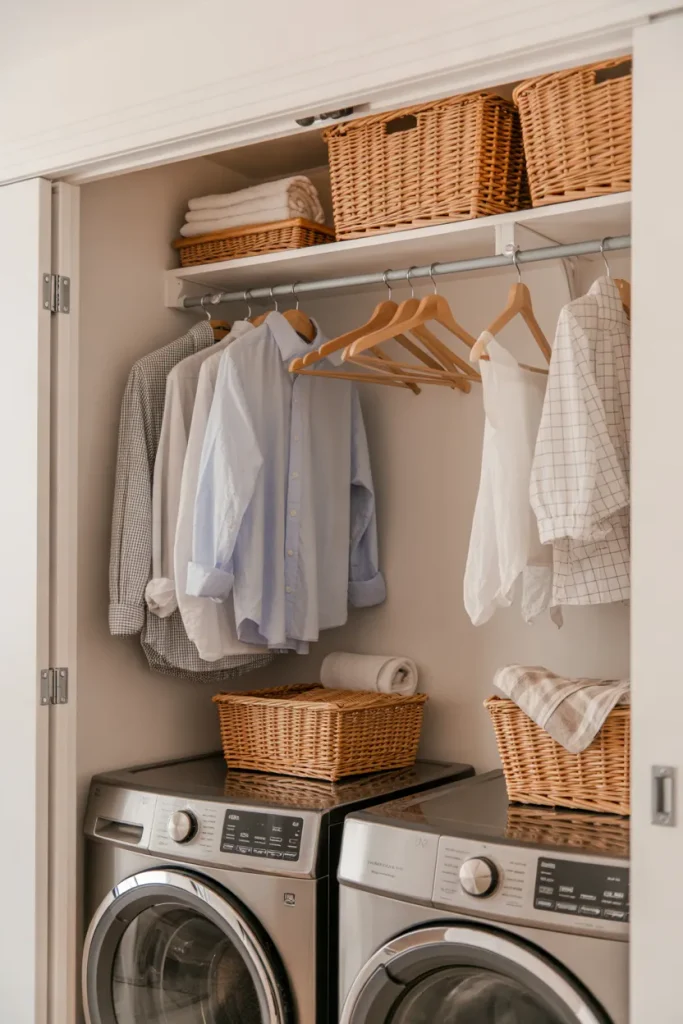
Wall Mounted Drying Rod
DO:
- Install the rod near the dryer for quick hanging.
- Choose a strong metal or wooden rod.
- Use matching hangers to keep the area visually neat.
- Leave enough height for longer clothing items.
DON’T:
- Avoid placing the rod where doors cannot open fully.
- Don’t overload it with heavy laundry.
- Avoid hanging items that block shelves or cabinets.
- Don’t install without checking wall support.
A drying rod adds practical hanging space without taking up floor area. It helps prevent wrinkles and keeps freshly dried clothes organized. I’ve seen this work especially well in compact rooms where a traditional drying rack would make the space feel crowded.
Under Counter Storage
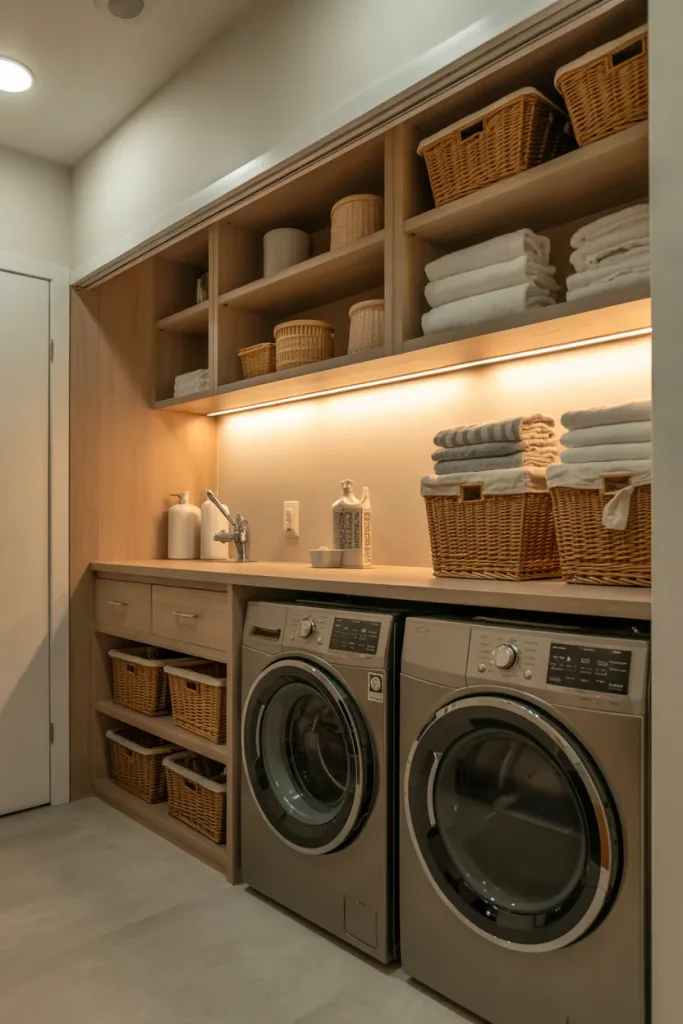
Cost: Medium | Time: One day | Skill Level: Intermediate | Best For: Renovated laundry spaces
Under counter storage makes use of the lower areas that often stay empty in small rooms. Drawers and pull out baskets can hold detergent, towels, ironing supplies, and cleaning accessories while keeping surfaces clear.
This layout is especially helpful for homeowners planning a laundry room update. A customized counter with storage underneath creates both a folding area and hidden organization. Careful measurements help ensure cabinets fit around appliances without limiting access.
Open Floating Shelves
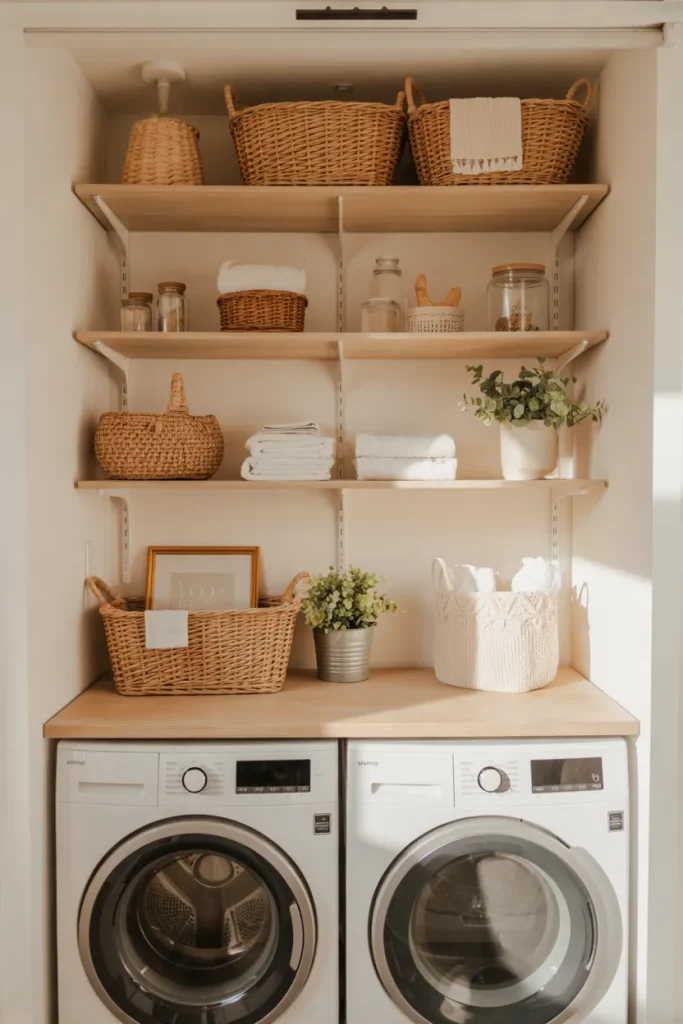
Quick Tip:
Keep open shelves visually balanced by combining storage baskets with a few decorative pieces. Store small items inside matching containers so the shelves look tidy while remaining easy to access.
Open floating shelves create storage without making a small laundry room feel closed in. They are useful for displaying everyday supplies while adding warmth through wood textures and organized baskets. I’ve noticed this style works best when shelves are not overloaded and each item has a clear purpose.
Magnetic Supply Holders

BEFORE:
Small laundry accessories often disappear inside drawers or create clutter around machines. Items like clothespins, stain removers, and brushes may not have a convenient storage spot.
AFTER:
Magnetic holders create quick access storage on unused metal surfaces. Small essentials stay visible, organized, and easy to grab during laundry tasks without taking up shelf space.
This simple storage solution works well for renters and small spaces because it requires little installation. I’ve seen people use magnetic containers to organize tiny items that usually create mess, helping the laundry area stay cleaner with minimal effort.
Color Coordinated Baskets
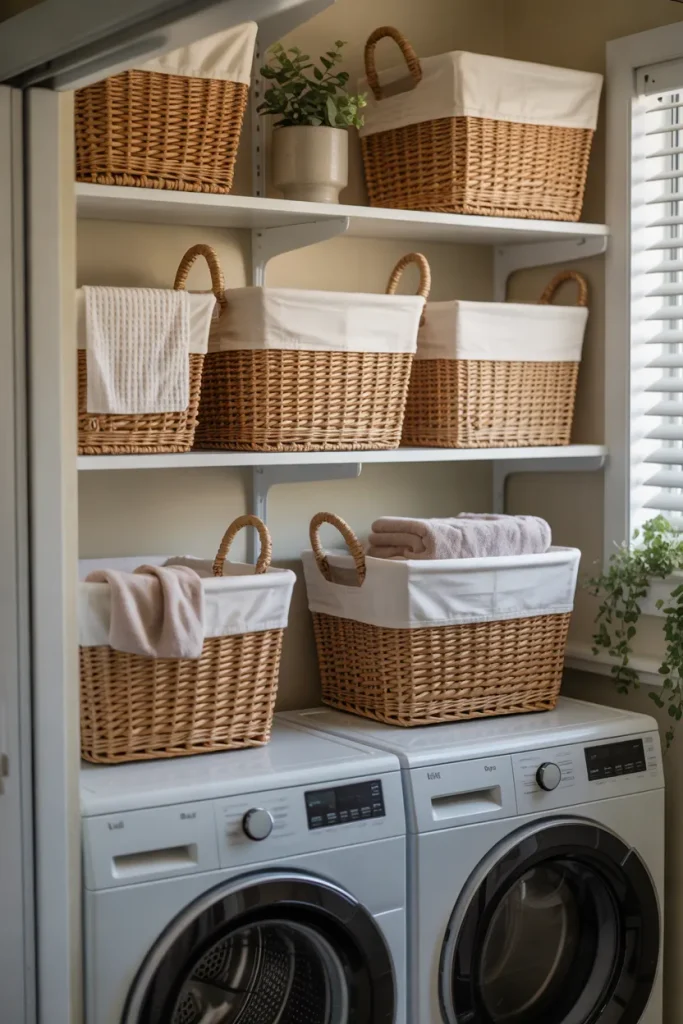
- Select baskets in two or three matching shades.
- Assign each basket a specific purpose.
- Use larger baskets for towels and linens.
- Choose materials that match your room style.
Color coordinated baskets make storage look intentional while keeping supplies hidden. They are useful for grouping similar items like cleaning products, extra linens, and laundry accessories. This approach helps small rooms feel calmer because visual clutter is reduced without sacrificing easy access.
A consistent basket style can make simple shelving look more polished. For best results, choose durable materials that can handle daily use and occasional moisture.
Compact Ironing Station

Cost: Medium | Time: One afternoon | Skill Level: Beginner | Best For: Small laundry rooms
A compact ironing station keeps pressing supplies together instead of storing them in different rooms. A foldable board, wall hook, and small shelf can create a complete setup without taking much space.
This arrangement works well for homes where ironing is occasional but still necessary. Keeping the iron, spray bottle, and accessories nearby makes laundry days smoother and prevents these items from becoming misplaced.
Laundry Closet Makeover

- Use matching bins to organize detergents and cleaning products.
- Add vertical shelves above appliances for extra storage.
- Install hooks for laundry bags, brushes, or small tools.
- Keep only frequently used items visible in the closet area.
A well-planned laundry closet can make a tiny space feel more functional and organized. Small laundry room organization ideas work best when every item has a specific place. I’ve seen compact laundry areas become much easier to maintain by combining vertical storage, simple labels, and smart use of hidden spaces.
CONCLUSION
A beautiful laundry room does not depend on having a large space. Smart storage choices, clear organization systems, and thoughtful layouts can help even the smallest rooms work better. These small laundry room organization ideas provide practical inspiration for creating a cleaner and more enjoyable area. Save this post on Pinterest for your next home project, try the ideas that fit your needs, and share this guide with anyone looking for simple laundry room improvements. I’ve seen how small changes can completely shift the way a space feels and functions.