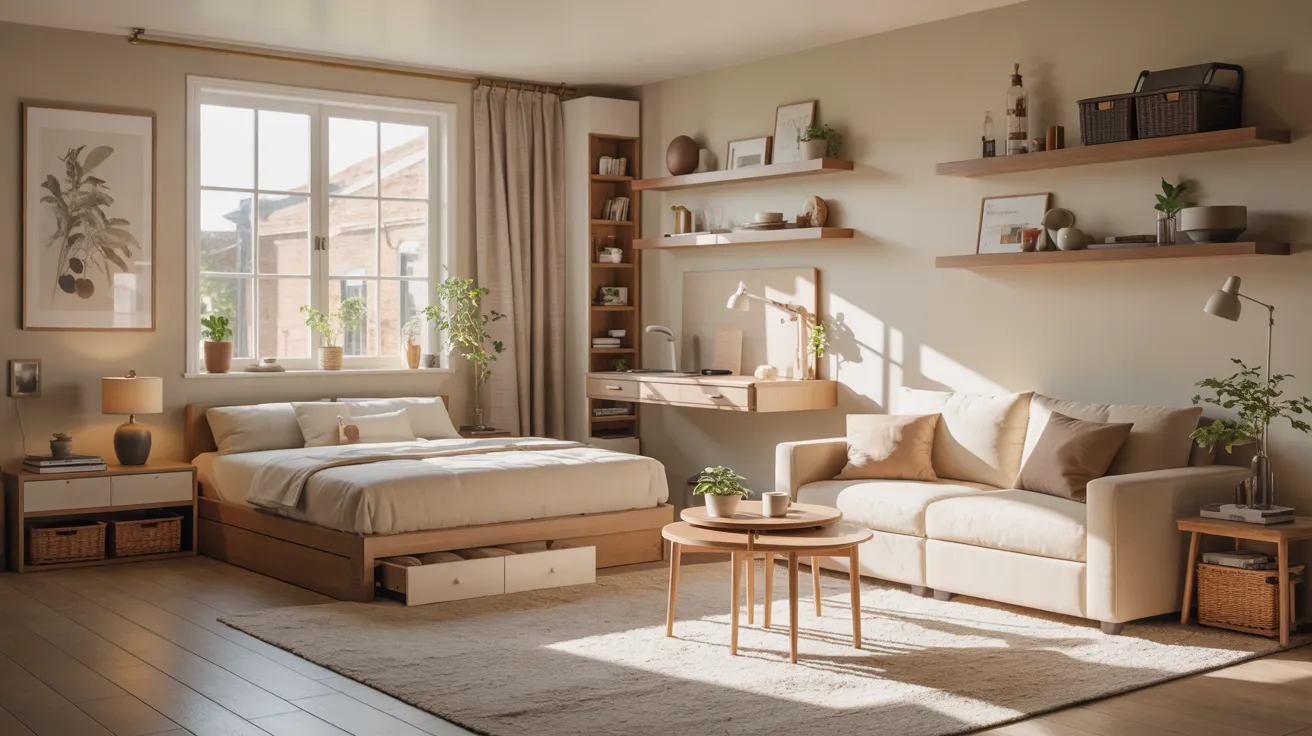
23 Tiny Studio Apartment Hacks for Clever Space Saving
Does your studio feel crowded even after you clean it? A bed, a desk, and a few everyday essentials can quickly swallow the floor. These tiny studio apartment hacks help you find room you didn’t know you had.
From rolling drawers beneath the bed to wall desks that fold away, the ideas in this guide focus on practical changes you can actually use. You’ll find simple ways to store shoes, organize a small kitchen, separate your sleeping area, and make furniture work harder without making your home feel packed.
The trick isn’t buying more organizers. It’s choosing the right spot for each thing and keeping walking paths clear. Start with the corner that frustrates you most, and let the rest of your space follow.
Under Bed Rolling Drawers
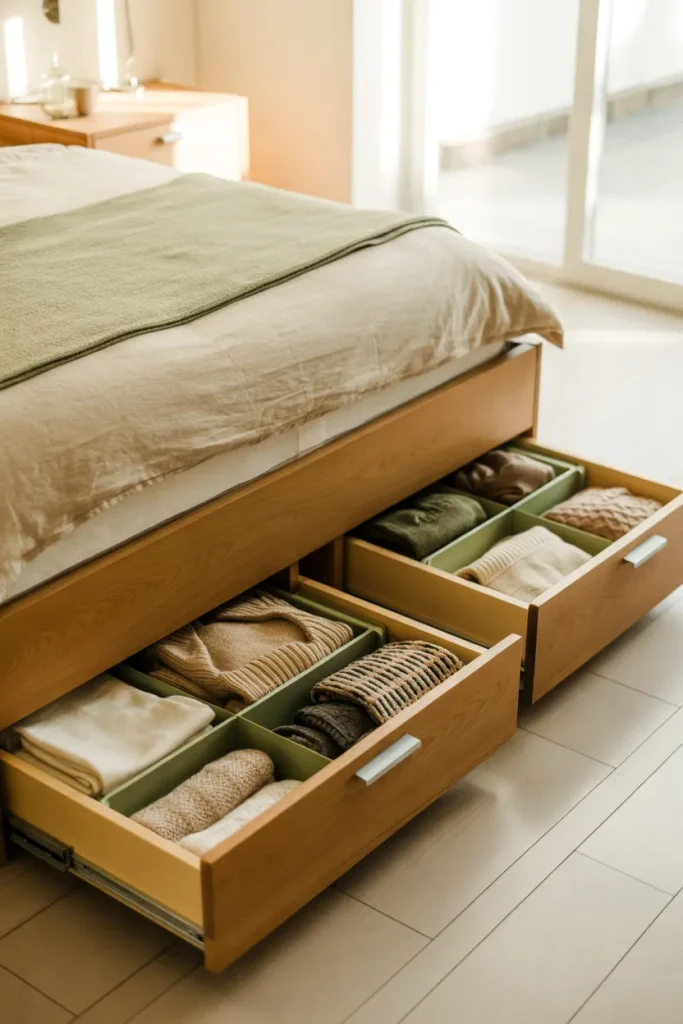
The space beneath your bed could replace an entire dresser drawer. Slim rolling bins keep spare sheets, bulky sweaters, and towels out of sight without taking up another inch of floor space. Measure the gap beneath the frame, including any low support bars, before choosing storage containers.
Choose drawers with handles you can reach easily, and use small fabric dividers to stop everything from mixing together. On thick rugs, smooth sided bins may slide better than tiny wheels. Keep the things you need most near the front so storage stays convenient, not frustrating.
Fold Down Wall Desk

- Clear the walkway: Your studio feels larger when the desk folds flat after work. Choose a model that leaves enough room to move comfortably.
- Measure your workspace: Check that the desktop can fit your laptop, notebook, and other daily essentials.
- Mount it securely: Follow the manufacturer’s weight limits and use hardware suitable for your wall.
- Use vertical storage: Install a shallow floating shelf above the desk for notebooks and stationery.
- Choose compact seating: A lightweight folding chair can slip beside your wardrobe when you’re finished working.
A wall mounted desk helps your work corner disappear when the day ends. Before buying, check the desk’s open depth so your chair does not block a walkway. Renters can get a similar setup with a freestanding drop leaf table that folds neatly against a wall.
Over Door Pocket Organizers

Quick Tip:
A door can hold everyday essentials without needing another shelf. Choose a slim organizer with soft pockets, and test whether the door still closes smoothly before filling it.
Keep the items you grab most at eye level, such as keys, sunglasses, and shopping bags. Reserve lower pockets for less frequently used accessories. Avoid heavy bottles that could strain the hooks, and place felt pads beneath metal hangers to reduce scratches on painted doors.
Ceiling Track Curtain Divider

BEFORE:
Your bed is the first thing guests notice when they enter the apartment. With no clear separation between sleeping and living areas, the entire studio can feel like one crowded bedroom.
AFTER:
A flowing curtain creates a private sleeping corner while keeping the layout flexible. Pull it closed for a cozy bedroom atmosphere, then open it during the day to restore the spacious feel.
Choose lightweight linen or cotton curtains in colors that match your walls. A ceiling mounted track keeps the divider looking clean without bulky furniture. For renters who cannot drill, a suitable tension rod or freestanding curtain frame can create a similar effect without permanent changes to the apartment.
Discover More: 25 Genius 400 Sq Ft Studio Apartment Layout Ideas to Maximize Every Inch
Vertical Kitchen Rail Storage
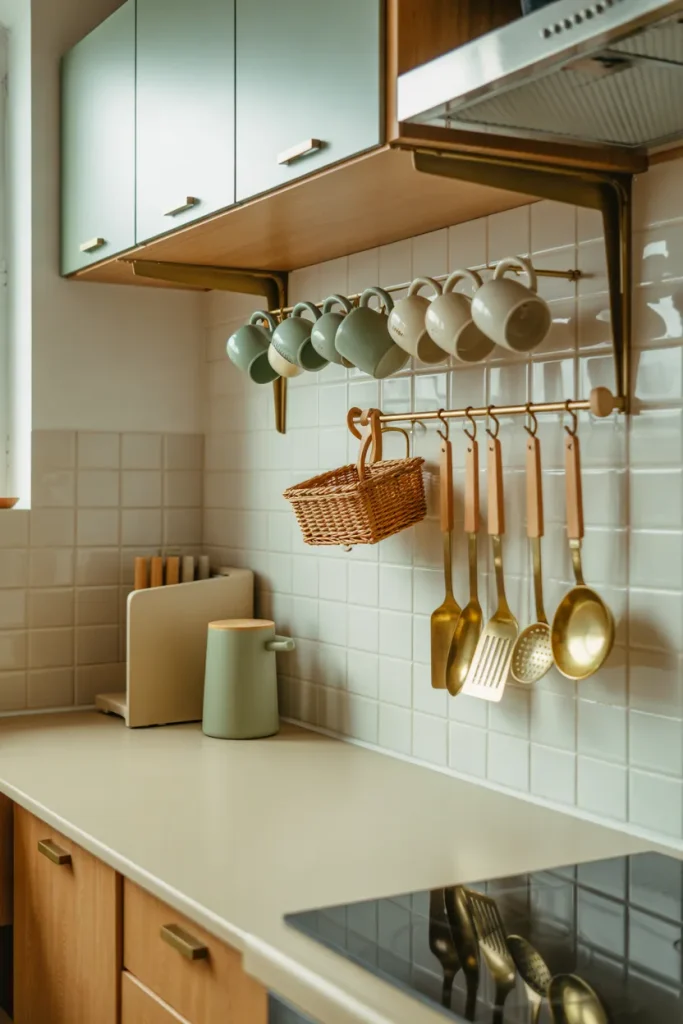
1. Clear the countertop: Give crowded kitchen surfaces breathing room by moving frequently used tools onto the wall. Start with utensils that already take up valuable drawer space.
2. Choose a suitable rail: Measure the empty wall above your preparation area. Select a sturdy kitchen rail that fits without interfering with cabinets or electrical outlets.
3. Arrange everyday essentials: Hang spatulas, measuring spoons, and lightweight baskets using compatible hooks. Keep your most frequently used tools within comfortable reach.
4. Protect your cooking area: Position rails away from direct burner heat and follow the manufacturer’s installation and weight guidelines.
Wall rails make compact kitchens easier to use because everyday tools stay visible without covering precious counter space. Match your hooks and rails for a neat, coordinated appearance. If drilling is restricted, choose a suitable adhesive system for lightweight items, checking the surface requirements and weight limits first.
Nesting Coffee Tables
| Feature | Traditional Coffee Table | Nesting Coffee Tables |
|---|---|---|
| Floor space | Occupies a fixed area | Smaller table tucks underneath |
| Flexibility | Stays in one position | Tables separate when needed |
| Daily use | One large surface | Adjustable surfaces for different activities |
| Cleaning | Requires moving one bulky piece | Smaller pieces move individually |
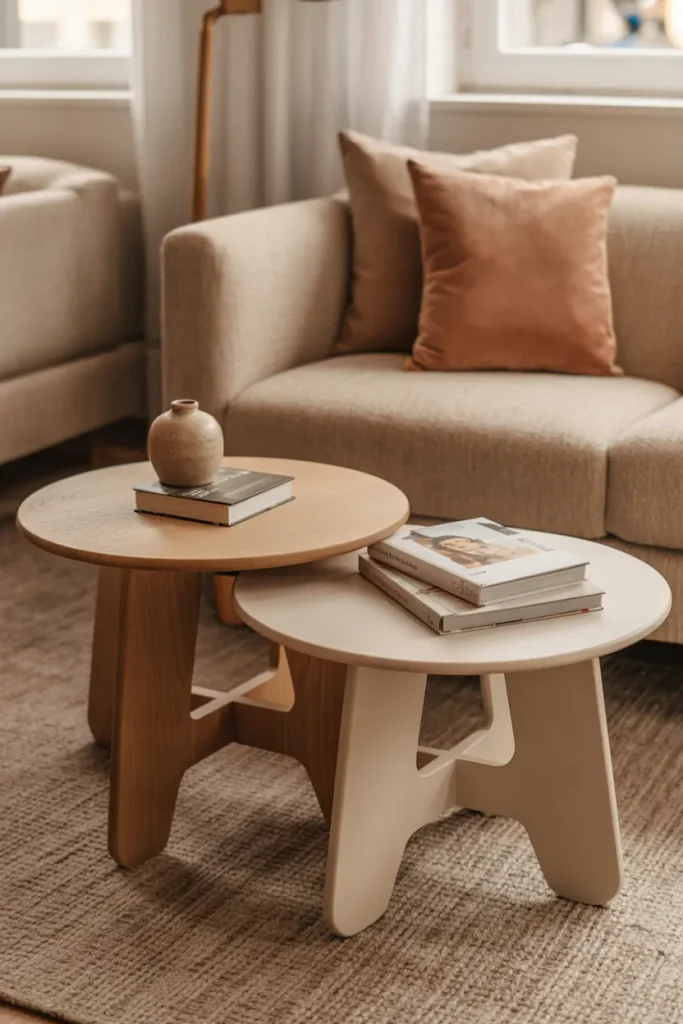
A crowded living area needs furniture that adapts throughout the day. Nesting tables provide extra surfaces for snacks, drinks, or a laptop without permanently filling the floor. Choose rounded edges for narrow walkways, and measure both tables together to ensure they fit comfortably beside your sofa.
Slim Entryway Shoe Cabinet

DO:
- Measure your entryway with the front door fully open before choosing a cabinet.
- Choose a shallow tilt out design that keeps shoes hidden without blocking the walkway.
- Arrange frequently worn shoes in the easiest compartments to reach.
- Secure the cabinet according to the manufacturer’s instructions to prevent tipping.
DON’T:
- Don’t choose a deep cabinet that makes your entrance feel cramped.
- Don’t overload compartments beyond their recommended capacity.
- Don’t store wet or muddy shoes inside enclosed storage.
- Don’t ignore the space needed to open each compartment comfortably.
An entryway can turn into a shoe pile faster than any other corner. A shallow shoe cabinet holds several pairs while keeping the path clear. Check the manufacturer’s shoe size capacity before ordering, since bulky trainers and boots may not fit. Keep everyday footwear at an easy to reach height.
Storage Ottoman Seating

Best For: Small living rooms that also serve as sleeping areas.
Storage: Extra blankets, spare cushions, magazines, and everyday accessories.
Setup: No drilling required, with enough clearance to lift the lid.
Style: Soft upholstered fabric in cream, oatmeal, or warm taupe.
Extra seating is useful, but an empty chair often becomes another place for clutter. A storage ottoman gives you a soft seat, a footrest, and a hidden compartment in one piece. Pick a hinged lid that stays safely open and leave enough room to lift it without moving furniture.
Corner Floating Shelves

That awkward corner beside the window can become useful storage without squeezing in another cabinet. Install two or three small floating shelves above a reading chair or beside the sofa. Keep the lowest shelf high enough to avoid head bumps, and use matching baskets to organize smaller items.
Before drilling, check the wall material, shelf weight rating, and possible hidden pipes or wires. Heavier objects need shelves with suitable structural fixings, not decorative brackets alone. A few books, a small plant, and a decorative bowl create a practical corner without making the room feel crowded.
Stackable Dining Stools
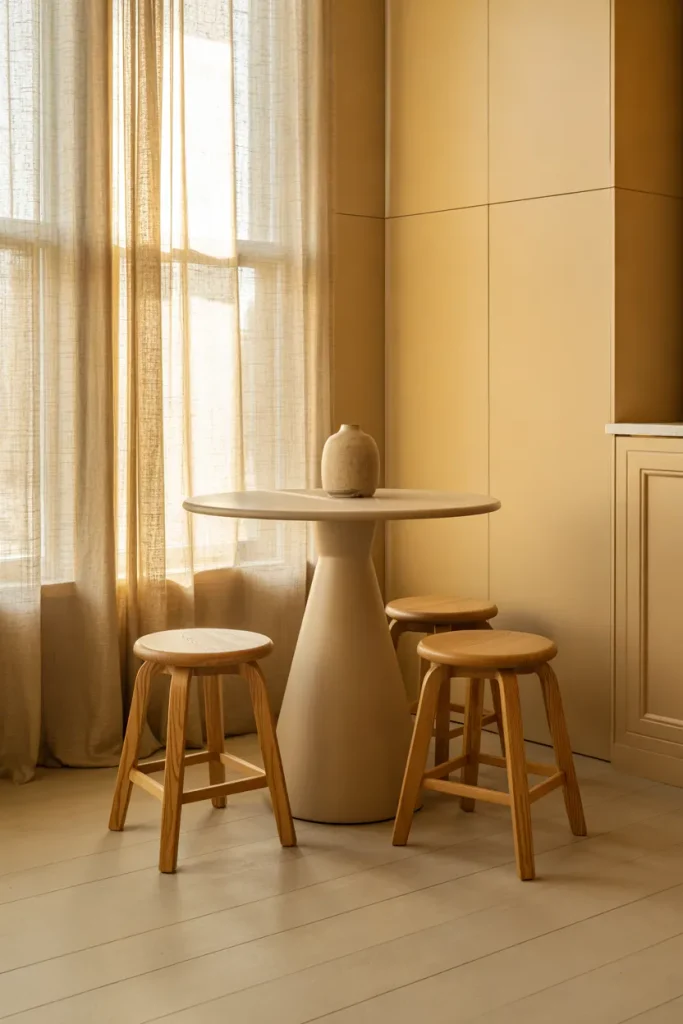
- Clear the floor: Extra dining chairs can crowd a tiny room. Choose lightweight stools that stack neatly when not in use.
- Pick compact shapes: Round or square stools without bulky backs are easier to store in narrow corners.
- Match your furniture: Natural wood, matte white, or soft beige finishes help the stools blend with your existing decor.
- Check comfort and safety: Look for stable legs, suitable seat height, and a weight capacity that meets your needs.
- Create flexible seating: Pull out extra stools when friends visit, then stack them beside a cabinet afterward.
For a studio that doubles as a dining room and workspace, stackable stools provide seating without keeping extra chairs out all week. Check the stacked height before buying, and add felt pads underneath to protect your flooring. Store them somewhere accessible so unexpected guests never create a furniture problem.
Full Length Mirror Placement
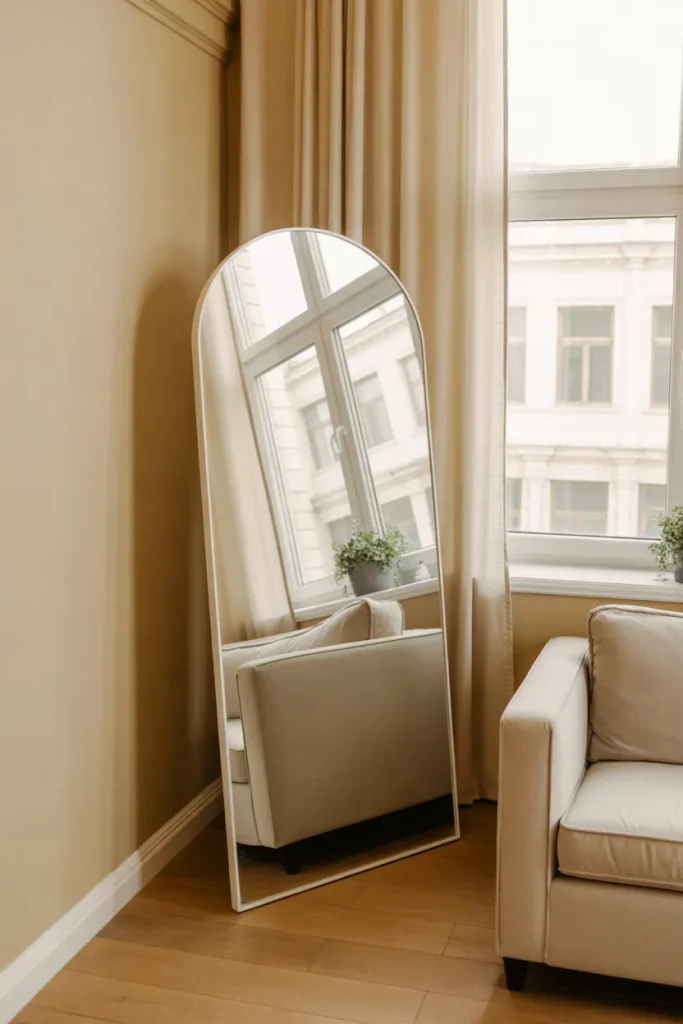
Quick Tip:
A mirror works best when it reflects light and an uncluttered part of the room. Position a tall mirror near a window rather than directly opposite a crowded storage area, and secure it safely to prevent tipping.
A carefully placed mirror can make a narrow studio feel brighter and visually deeper. Choose a slim frame in oak, brass, or matte white to match your decor. Keep the surrounding floor clear, and test different positions before mounting. Even one tall mirror can change how open your apartment feels.
Tall Narrow Bookcase
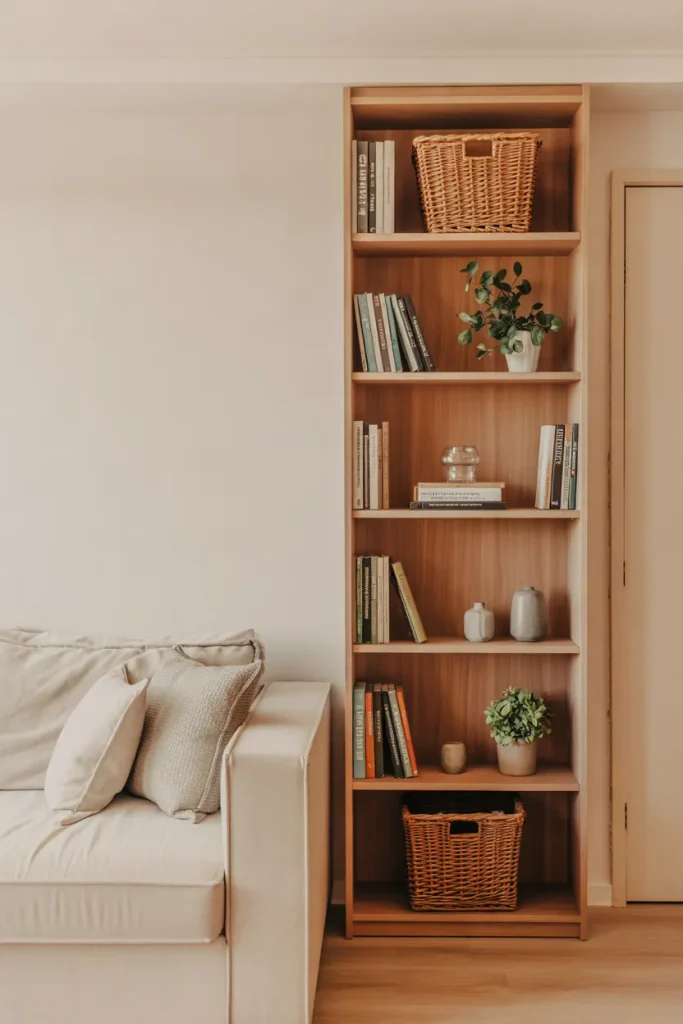
BEFORE:
Books, decorative accessories, and storage baskets are scattered across several small tables. The floor feels crowded, and everyday items have no clear place to belong. Empty wall height remains unused.
AFTER:
A tall, narrow bookcase brings everything into one organized storage area. Books sit neatly alongside matching baskets, while the room gains more open floor space. The vertical shape also draws attention upward without requiring a bulky cabinet.
Choose a bookcase with adjustable shelves so taller baskets and books fit comfortably. Place frequently used belongings around waist height, keeping lighter decorative pieces above. Secure the unit to the wall with suitable anti tip hardware, especially in homes with children or pets. Leave some shelves partially empty for balance.
Daybed Sofa Setup
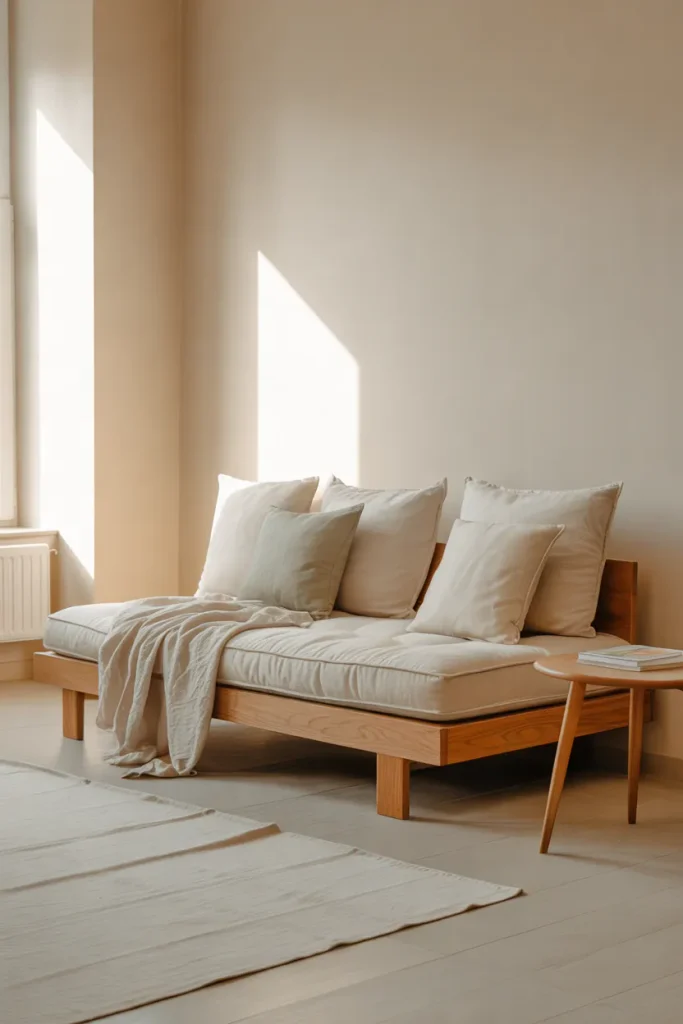
1. Choose a dual purpose bed: Skip the extra sofa and select a daybed that works for both lounging and sleeping. A simple frame with supportive cushions keeps the setup comfortable.
2. Find the right position: Place the daybed against the longest available wall, leaving enough floor space for easy movement.
3. Layer supportive cushions: Arrange firm back cushions along the wall and add smaller pillows for comfortable daytime seating.
4. Keep bedding organized: Store your duvet and sleeping pillows in a nearby basket or under bed drawer during the day.
A daybed makes small apartment living more flexible without requiring two large pieces of furniture. Choose washable cushion covers for easier cleaning, and keep your color palette consistent with the surrounding room. This arrangement works especially well for anyone who wants a comfortable lounge area without sacrificing sleeping space.
Explore More: 23 Stunning 500 Sq Ft One Bedroom Apartment Layout Ideas
Rolling Kitchen Cart

| Feature | Fixed Kitchen Island | Rolling Kitchen Cart |
|---|---|---|
| Floor Space | Occupies a permanent area | Moves aside when not needed |
| Storage | Cabinets or fixed shelving | Compact open shelves and baskets |
| Flexibility | Remains in one location | Rolls between kitchen and dining areas |
| Installation | May require assembly or permanent fitting | Usually needs basic assembly only |
| Best Use | Larger kitchens with clear walkways | Small kitchens needing flexible storage |
Limited counter space can make even simple meal preparation frustrating. A rolling kitchen cart gives you an extra surface while keeping storage underneath. Choose locking wheels for stability, and avoid placing heavy appliances on lightweight carts. Measure your narrowest walkway before buying so the cart never blocks daily movement.
Closet Shelf Dividers

DO:
- Measure your closet shelves before purchasing dividers to ensure a secure fit.
- Separate sweaters, jeans, and everyday shirts into individual stacks.
- Choose slim acrylic or metal dividers to avoid wasting valuable shelf width.
- Keep frequently worn clothes at eye level for easier access.
DON’T:
- Don’t build tall clothing stacks that collapse whenever you remove one item.
- Don’t force dividers onto shelves thicker than their recommended size.
- Don’t overcrowd compartments with clothes you rarely wear.
- Don’t place heavy storage boxes on weak or unsupported shelves.
Messy clothing piles can make a small closet feel impossible to manage. Shelf dividers create clear boundaries, helping folded clothes stay upright and easy to find. Start with two or three dividers rather than filling every shelf. Leave enough room between stacks so removing a sweater doesn’t disturb everything beside it.
Over Toilet Shelving

Hidden Space: The empty wall above the toilet can hold everyday essentials without adding another floor cabinet.
Cost: Low to moderate, depending on the shelf and mounting hardware.
Time: About an hour for straightforward assembly and installation.
Best For: Bathrooms with limited cabinets and clear wall space.
A bathroom with one tiny cabinet can feel full after storing just a few towels. Add a shallow shelf or over-toilet rack for toilet paper, rolled washcloths, and lightweight toiletries. Check the lid and tank clearances, anchor tall units properly, and keep heavy or breakable items off high shelves.
Pegboard Storage Wall

A cluttered worktop often has more small objects than actual work space. A pegboard gives those loose items a clear home without adding a storage cabinet. Mount one above a compact desk or near your entryway, then use hooks, little baskets, and narrow shelves to group what belongs together.
Start with your everyday items and leave a little blank space so the board stays easy to scan. Check the pegboard’s weight limits and use fixings suitable for your wall. In a rental, a freestanding pegboard placed on a sturdy shelf can offer flexible storage without drilling.
Drop Leaf Dining Table
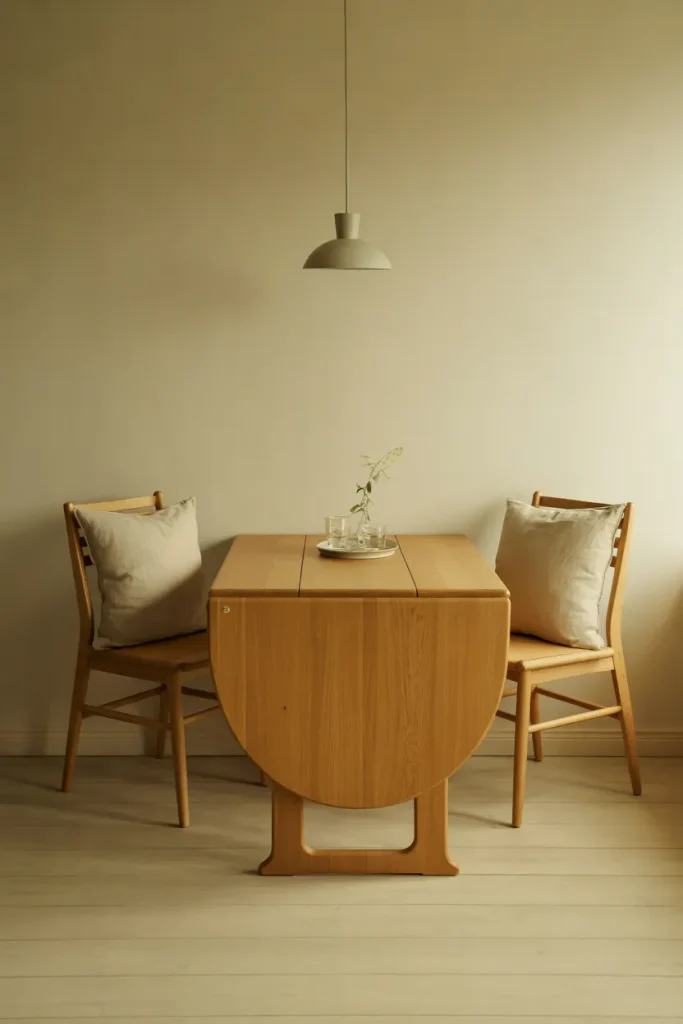
- Measure both sizes: A table that fits while folded might crowd the room when opened. Check both dimensions, including the space needed to pull out chairs.
- Position near a wall: Keep the folded side against a clear wall so your main walkway stays open.
- Choose sturdy hinges: Look for a stable support mechanism and follow the manufacturer’s weight limits.
- Use it beyond meals: Leave one leaf up for coffee or laptop time, then unfold both for dinner.
- Keep seating compact: Pair the table with slim chairs that tuck underneath when not in use.
A drop leaf table works especially well when dinner space is only needed for an hour or two. The smaller daily footprint gives you more room for stretching, cleaning, or moving around. Before ordering, mark the fully opened dimensions on your floor with painter’s tape to check the fit.
Magnetic Fridge Organizer
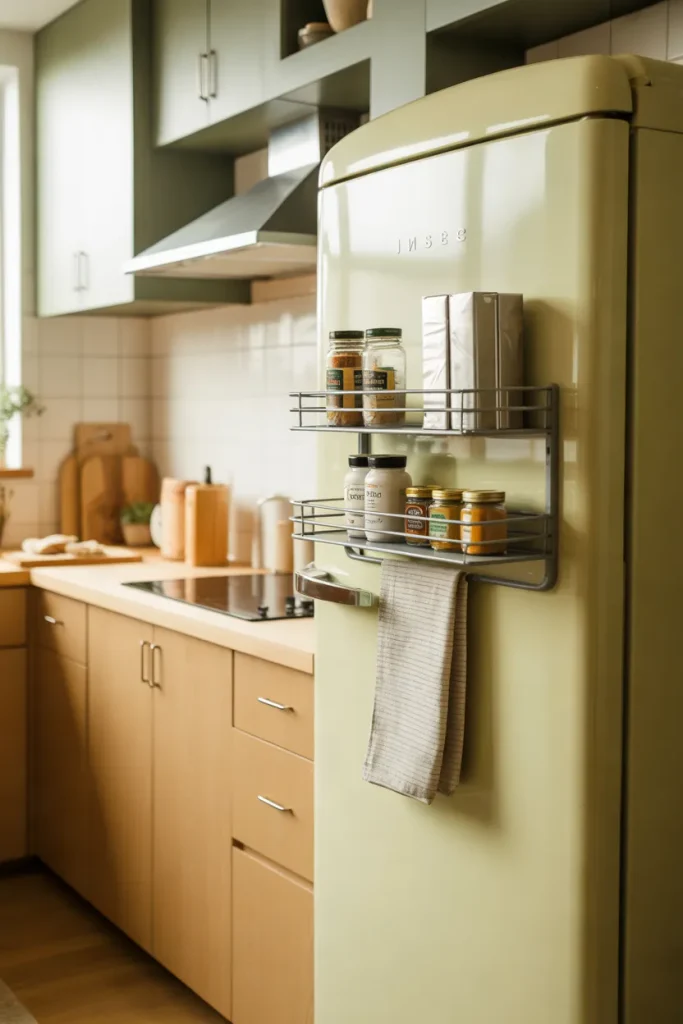
Quick Tip:
Your refrigerator’s empty side could be hiding valuable kitchen storage. Test whether the surface is magnetic before buying a rack, and choose a slim organizer that holds everyday essentials without blocking nearby cabinets.
Choose magnetic shelves made for refrigerator sides, not the warm back panel or door seal. Store lightweight spice jars, foil boxes, or a small towel, keeping magnets away from controls and vents. A narrow holder makes cooking essentials easy to reach while giving your prep counter more breathing room.
Floating Bedside Ledge
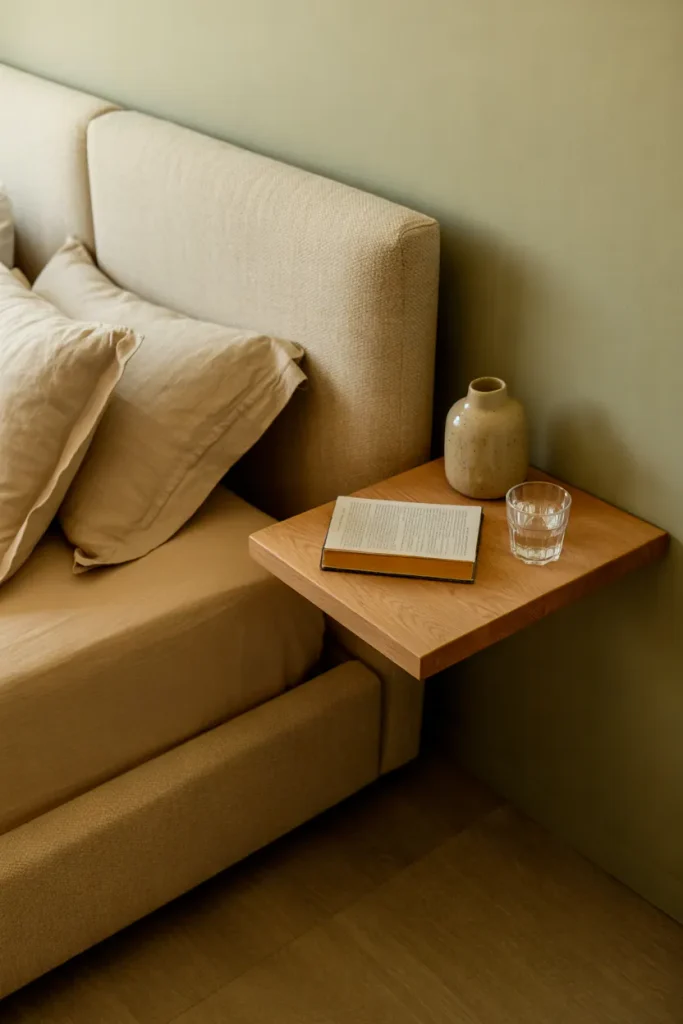
BEFORE:
A traditional bedside table takes up the narrow walking space beside your bed. Its bulky legs make cleaning difficult, and the tabletop quickly collects books, chargers, and forgotten cups.
AFTER:
A slim floating ledge provides a convenient spot for nighttime essentials without occupying precious floor space. The open area underneath makes the sleeping corner feel less crowded and easier to clean.
Measure the space between your bed and the wall before choosing a ledge. Select a shallow design with rounded corners, secure it to suitable wall support, and keep its surface for nightly essentials only. A clip on reading light can free up even more room beside your pillow.
Under Sink Pullout Baskets

1. Empty the cabinet: That jumble beneath your sink could be hiding valuable storage space. Remove everything and wipe the cabinet clean before reorganizing.
2. Measure around plumbing: Check the available width, depth, and height, including drainpipes and hoses. Choose narrow pullout baskets that move freely without touching plumbing connections.
3. Group your supplies: Place cleaning cloths, spare sponges, and unopened household essentials into separate baskets. Keep frequently used products toward the front for easier access.
4. Test the sliding system: Install the baskets according to the manufacturer’s instructions. Open and close them several times to check that nothing catches on pipes or cabinet hinges.
Under sink storage works best when every item has a defined place. Keep cleaning products in their original labeled containers, and never mix chemicals. If children or pets can reach the cabinet, use a suitable child safety lock. That little bit of planning keeps supplies tidy and access safer.
Double Hanging Closet Rod

| Feature | Single Hanging Rod | Double Hanging Rod |
|---|---|---|
| Clothing Space | Uses one hanging level | Creates two levels for shorter clothes |
| Organization | Different clothing types share one rail | Separates tops and bottoms |
| Vertical Space | Leaves unused height below short garments | Makes better use of closet height |
| Extra Furniture | May require additional clothing storage | Can reduce the need for another dresser |
Your closet might be wasting half its useful height. A second hanging rod creates more room for shirts, skirts, and folded trousers without adding another wardrobe. Measure your clothing lengths before installing it, reserve space for longer garments, and check that the existing rail supports the additional weight.
Slim Rolling Gap Cart
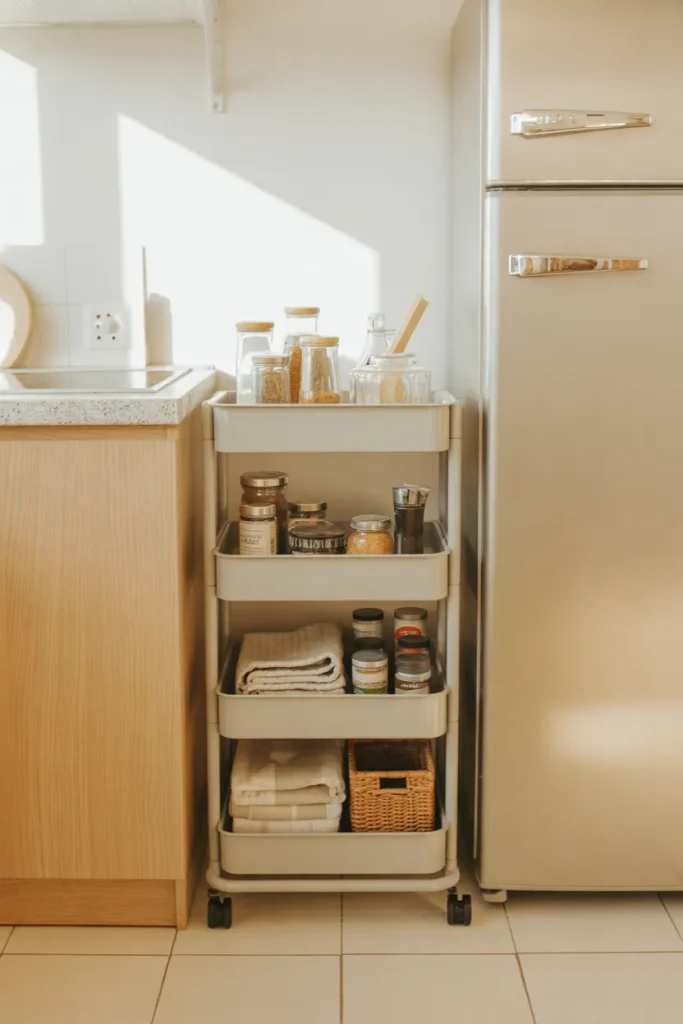
DO:
- Measure the narrow gap carefully, including baseboards and cabinet handles.
- Choose a slim cart with smooth rolling wheels and sturdy shelves.
- Organize lightweight pantry essentials in small labeled containers.
- Keep frequently used items on the easiest shelves to reach.
DON’T:
- Don’t block refrigerator ventilation or required appliance clearances.
- Don’t overload narrow shelves with heavy glass jars or appliances.
- Don’t choose a cart that scrapes against nearby cabinets.
- Don’t place tall, unstable items on the upper shelves.
Some tiny studio apartment hacks work in spaces you barely notice. A narrow rolling cart turns an awkward kitchen gap into useful storage without adding clutter to your countertops. Choose a model with raised shelf edges to prevent items from falling, and keep the heaviest supplies on the lowest shelf.
CONCLUSION
A small studio doesn’t need to do everything at once. It just needs to work for your real routines. Whether you choose a rolling cart for a narrow kitchen gap, a curtain for a little privacy, or shelves that use empty wall space, each change can make daily life easier.
These tiny studio apartment hacks are meant to be mixed, matched, and adjusted to your layout and budget. Start with one idea you can finish this week, then see what feels better before adding more. Save this post on Pinterest for later, and share it with a friend who could use a little extra room. Small changes add up.


